The Unseen Remedy
Three years and $9,500 later, I realized I didn't need medicine — I needed a precise frequency reset. I still can't believe what I discovered. Read the story below:
Research published in
Research conducted at
Every logo here corresponds to a study cited below, with author, year, and journal. The full list is at the end of this page.
"Your labs look fine. There's nothing seriously wrong with you."
I nodded. I said thank you. I walked out into the hallway, stopped at the first flight of stairs, and held on to the railing to climb ten steps.
I was twenty-six. A year earlier, I was standing on stage for two hours at a time, singing.
It went on for three years. Dozens of doctors, test after test, over $9,500. Each one found something small. None of them could explain why I couldn't get up.
Three years of paperwork.
I cried in my car after every appointment. Not because they told me I was sick. Because they told me I was healthy. And I still felt awful.
It took me a long time to accept what comes next, so I'll say it straight:
They were right. There was nothing wrong with me. My body wasn't what broke.
What broke was something that doesn't show up on any lab test and has no name in any medical chart.
And what put me back together was invisible too. Not a pill. Not a supplement. Not a diet.
Something you can't see, can't touch — and it passes through you anyway.
To understand what it was, you first need to know what broke.
And I think you're going to recognize yourself.
Think about who you were a few years ago. Not what you had. How you felt.
You woke up with energy.
You sang in the car.
You laughed until your cheeks hurt.
You'd take off on a Saturday with no plan.
The smell of rain could make your day.
You stayed up till 3 a.m. and felt fine the next day.
You did what you felt.
Your head hit the pillow and you were out.
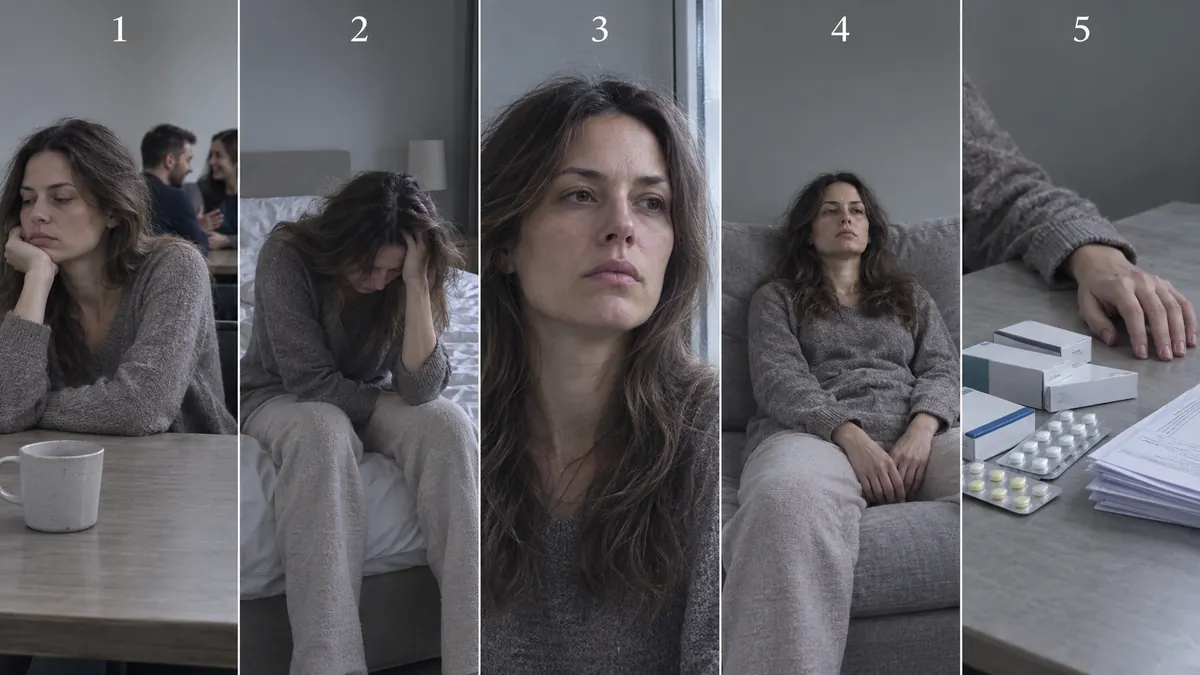
You wake up already tired.
You drive in silence.
You can't remember the last time you laughed like that.
You plan by Wednesday. Then cancel.
Things pass right by you and you don't feel them.
By 10 p.m. you're wiped. And you still can't sleep.
You do what you have to.
Your head hits the pillow and your mind keeps going.
It wasn't that long ago. It just feels like it.
And here's the strange part: from the outside, your life looks better now. More money. More experience. More respect. You have things you once would have done anything for.
Or the opposite — you never got where you wanted. You worked just as hard and it didn't work out.
And here's what nobody tells you: you feel exactly as little as the person who made it.
Neither of you feels anything like what you thought you'd feel.
Read this list slowly. See which one stops you.
I hear these words every week, from people who have nothing in common
I don't enjoy anything anymore. And I'm tired all the time.
Some who say it have everything. Others have been grinding for years and say the exact same words.
Some have lost someone. Others have been through nothing and feel it anyway.
The same sentence, from completely different lives.
It's not about what you have. It's about the state you're living from.
Because the same thing happened to all of them: they disconnected. And with the disconnection, they lost the state they used to live from.
This is the connection nobody makes. You don't feel bad because bad things are happening to you. You feel bad because you lost the state — and from this state, everything feels different.

And here's what most people get backwards. The state doesn't come from your problems. Most of the time, the problems come from the state.
When you're empty inside, you put things off. You make rushed decisions. You pick fights at home over nothing. You miss what's right in front of you. Then you look at how it all turned out and decide that's why you feel this way.
It was the other way around.
And from this state, the first thing to go is feeling itself. Joy stops coming. So does excitement. So does wanting anything at all. And they don't turn into sadness — sadness would at least be something. They turn into nothing.
At work, at home, in bed, with your friends. Flat, everywhere.
You're not living to live anymore.
You're living to get it over with.
You finish the project to be rid of it. You go on vacation so you can say you went — and post about it. You do everything for the outcome and feel nothing along the way — even though the way is almost your entire life.
You do what needs to be done. Well, even. Just without the spark.
And at night, that thought shows up: something's missing, and I don't know what.
And instead of doing something about it, you pick up your phone and scroll until you fall asleep.
I lived exactly this. For years. I never complained, because from the outside I had nothing to complain about: I was singing, I had the stage, I had students. And I did everything just to get it over with.
I'm not telling you this to scare you. I'm telling you so you know I'm not speaking from books: this state drained me dry. And that's how I ended up in hospitals.
I learned this too late, and I wish someone had told me in time.
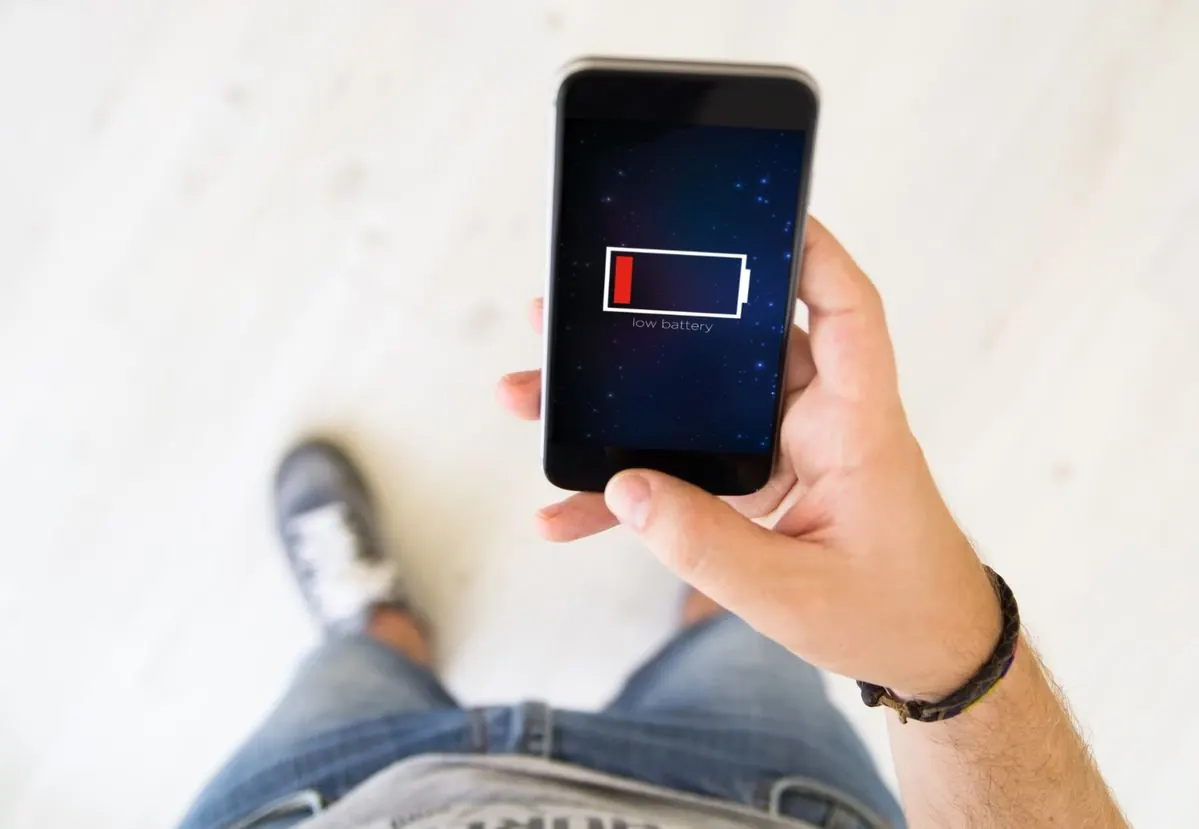
Think about your phone. You use it all day and forget to charge it. It runs. It runs. It runs. And then it shuts down.
It's not broken. It just ran out of power.
It works the same way with a person — except we don't shut down all at once. It always happens in the same order:
Read the chain top to bottom, then bottom to top. Everything from step two down comes from the state.
For me, step five looked exactly like this. I wasn't healthy anymore, but I wasn't officially sick either.
I picked up a throat infection while I was hospitalized. I developed early-stage asthma — me, who had never had anything like it. My digestion fell apart. My labs weren't clean anymore, but they weren't bad enough to set off anyone's alarm.
So they all told me the same thing:
There's nothing seriously wrong. If it gets worse, come back.
I felt that there was. And I felt that if I didn't do something, it would get worse.
And it would have.
This is the trap so many people live in for years: too sick to feel good, too well for anyone to help you. Nobody treats step five while it's still small. And nobody ever looks at step two.
Nobody goes from one to five overnight. That's why nobody notices. You slide one step a year, and by the time you reach the bottom, it feels like you've always been this way.
That's how I ended up in the hospital. I didn't get sick in a day. I had been disconnected for years — my body was just the last one to say it out loud.
And it's not just me. The link between the state you live in for years and your heart has been measured — not assumed.
"You're not broken.
You're disconnected."
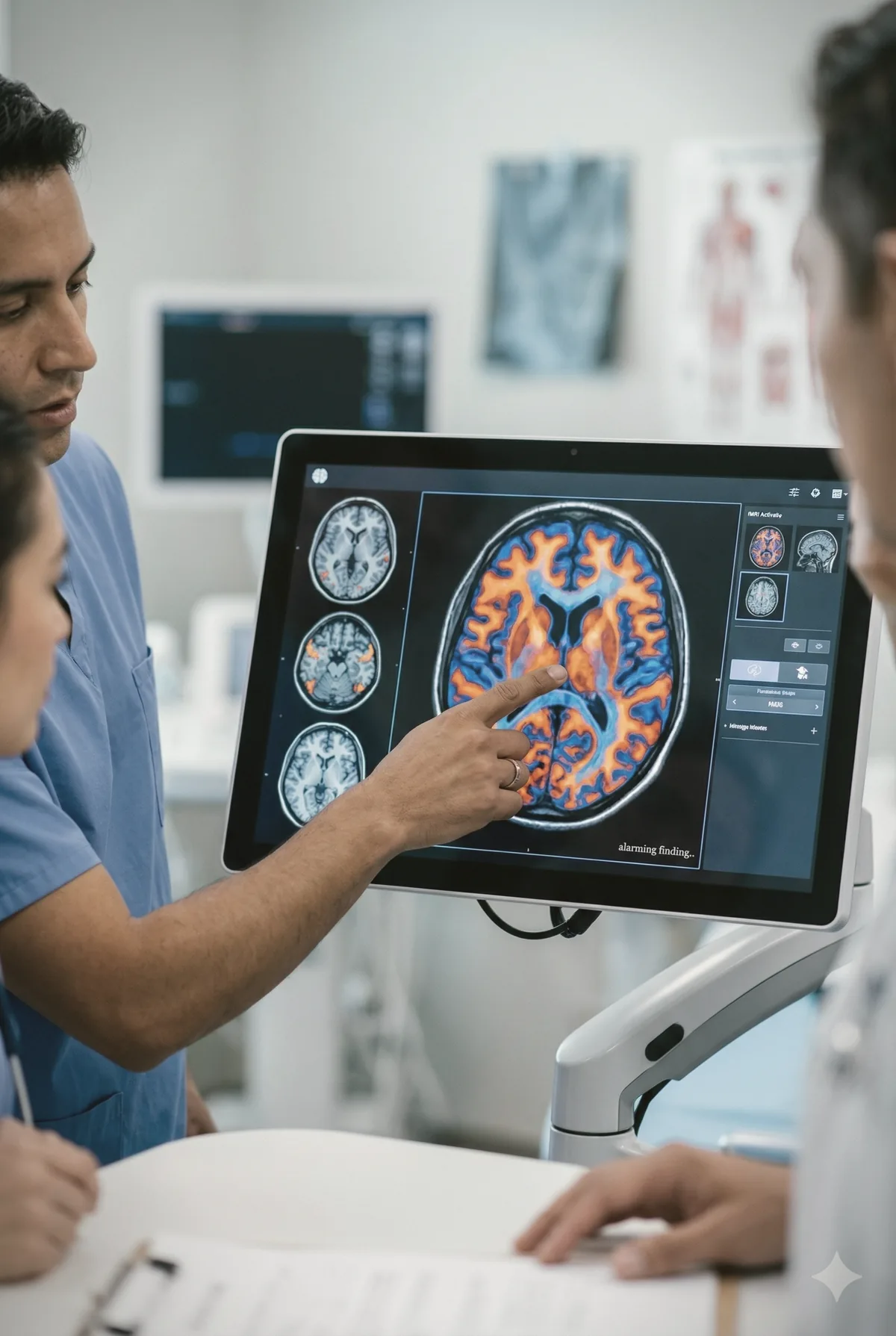
A study published in The Lancet scanned the brains of nearly three hundred people and followed them for years. The ones with more activity in the brain's stress center went on to have significantly more heart attacks and strokes.
At the end of this page are over 45 published studies — the documentation everything you read here stands on.
Your body keeps count of everything. And one day, it hands you the bill.
When someone says "it's just a state of mind" — it's exactly backwards. It's not "just" a state. It's the state. Everything else comes from it.
That's why there's no point patching symptoms one at a time — sleep with a pill, fatigue with vitamins, nerves with a vacation. Those are step five. The problem is at step two.
And the fix isn't to repair yourself, because you're not broken. It's to reconnect — and take your state back.
If it were a thing, you'd have bought it a long time ago. You're someone who solves problems.
But the state isn't on any shelf. It doesn't show up in your labs, in your bank account, or in the photos where you're smiling.

Here's the good news: it isn't gone. It's buried. And it can be uncovered.
I uncovered mine. It took me three years to figure out how, because I looked where everyone looks — doctors, tests, medicine.
It wasn't there.
It was in something I had known since I was nine years old. I'll tell you exactly what, further down this page. Read to the end.
Who's telling you this
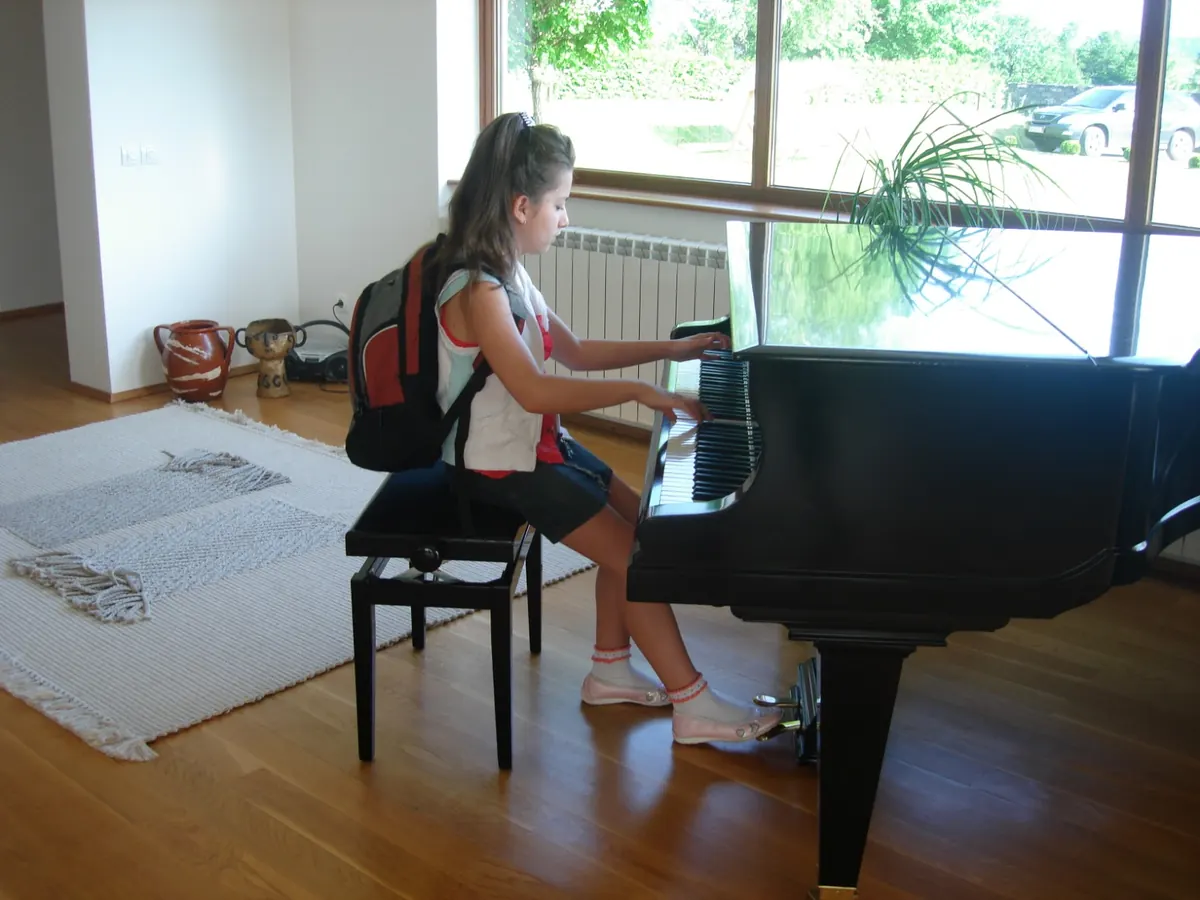
Hi. My name is Xenia Costinar — on the internet, Xenia Vocal Healer. When I first sat down at a piano to study seriously, at nine, the kids my age had already been playing for four years. In music, four years at that age isn't a gap. It's a canyon.
I closed it in one year.
The years I made up the four years.
I'm not telling you this to impress you. I'm telling you so you understand what kind of person is talking to you: someone who, once she finds what works, takes it all the way. A year later I won first prize at the Marcello Cusi international competition.
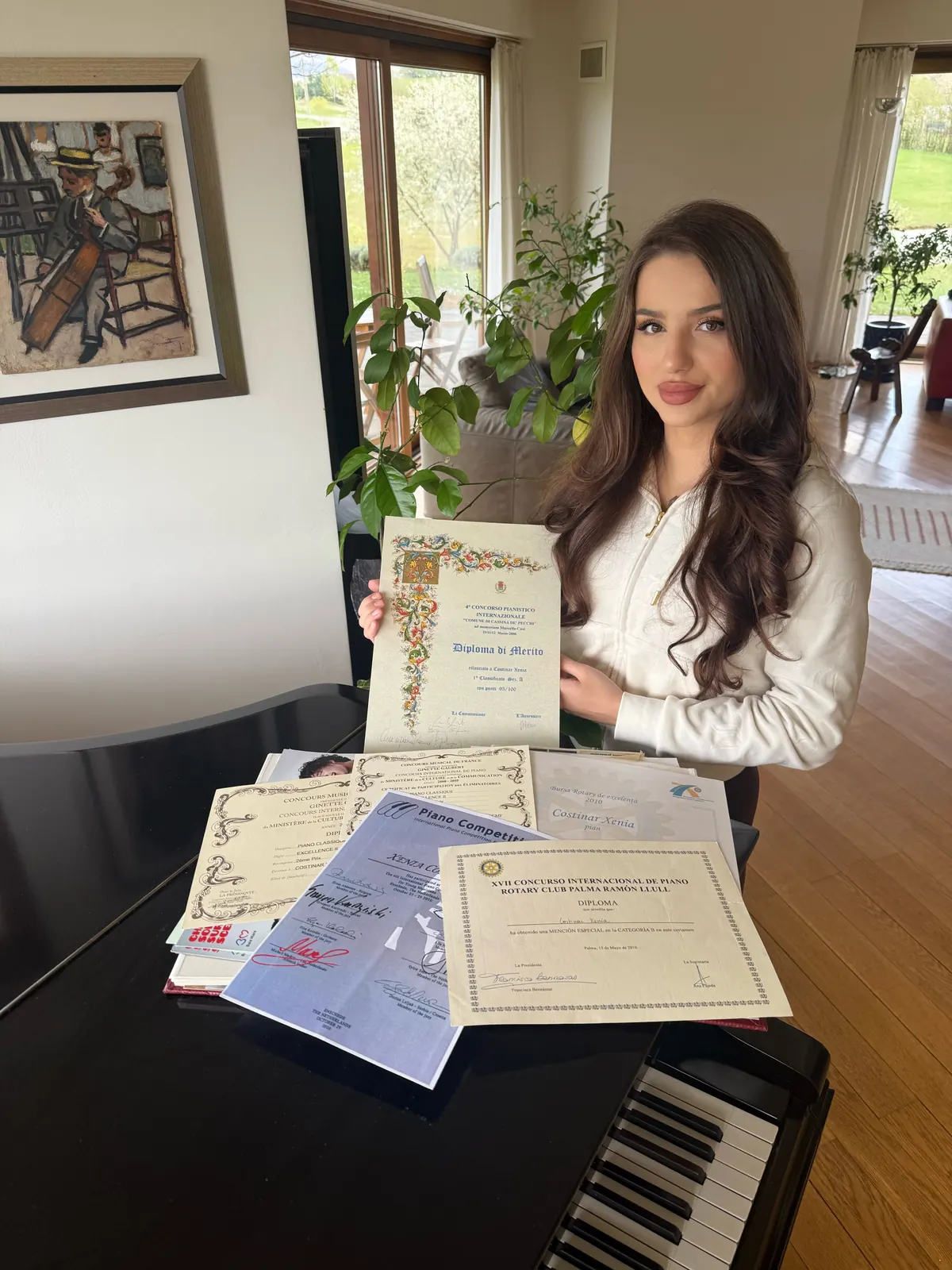
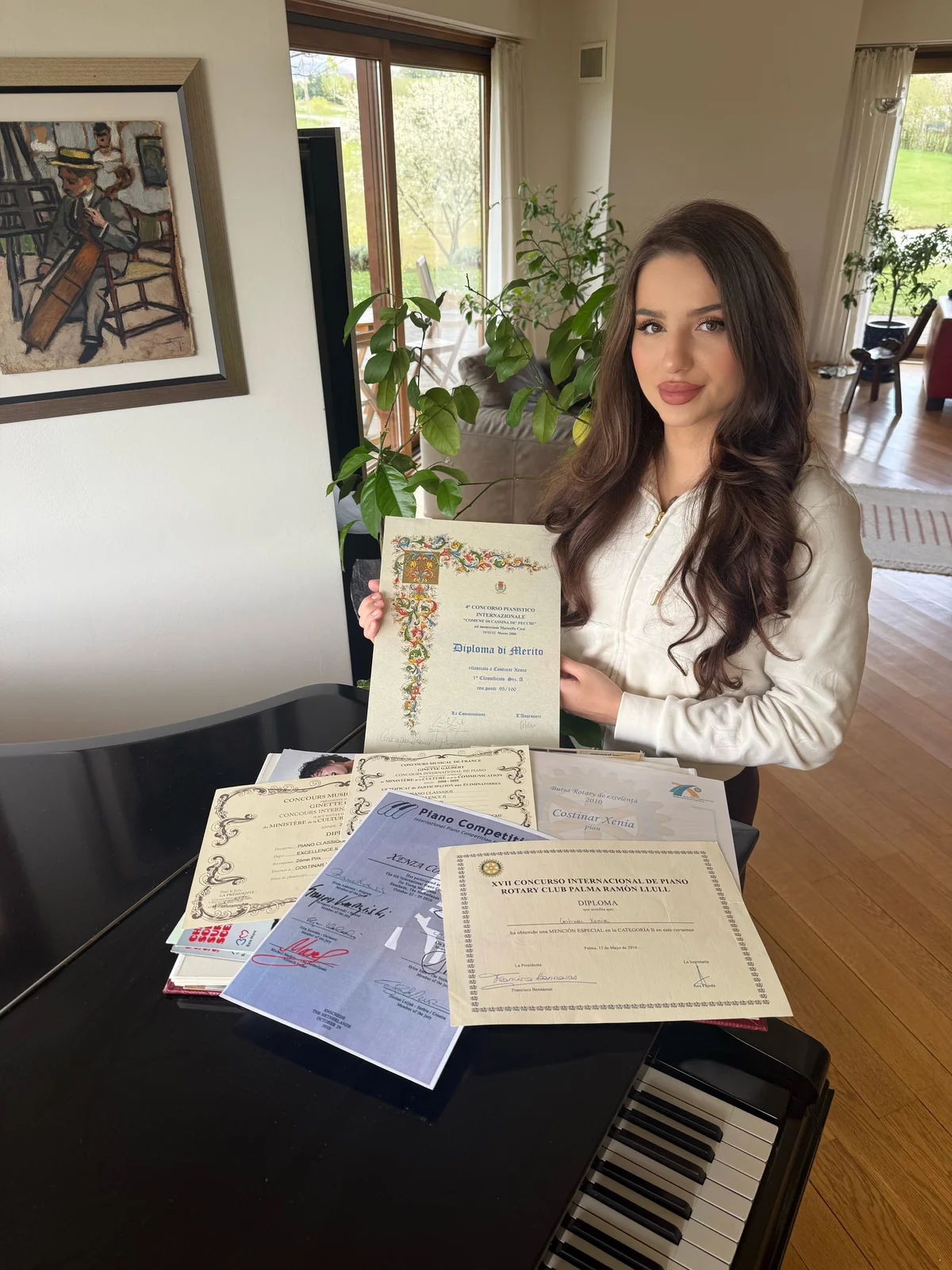
The diplomas are real. I'm holding them in my hands — this isn't a stock photo.
Not the piano. My voice.
Nobody gave me a chance. Not my teachers, not the school, not my parents. They all said the same thing: you've spent your whole life at the piano, it's too late, you don't stand a chance.
My first voice teacher listened to me for about four minutes. Then came the verdict:
You don't have a singing voice.
I was sixteen.
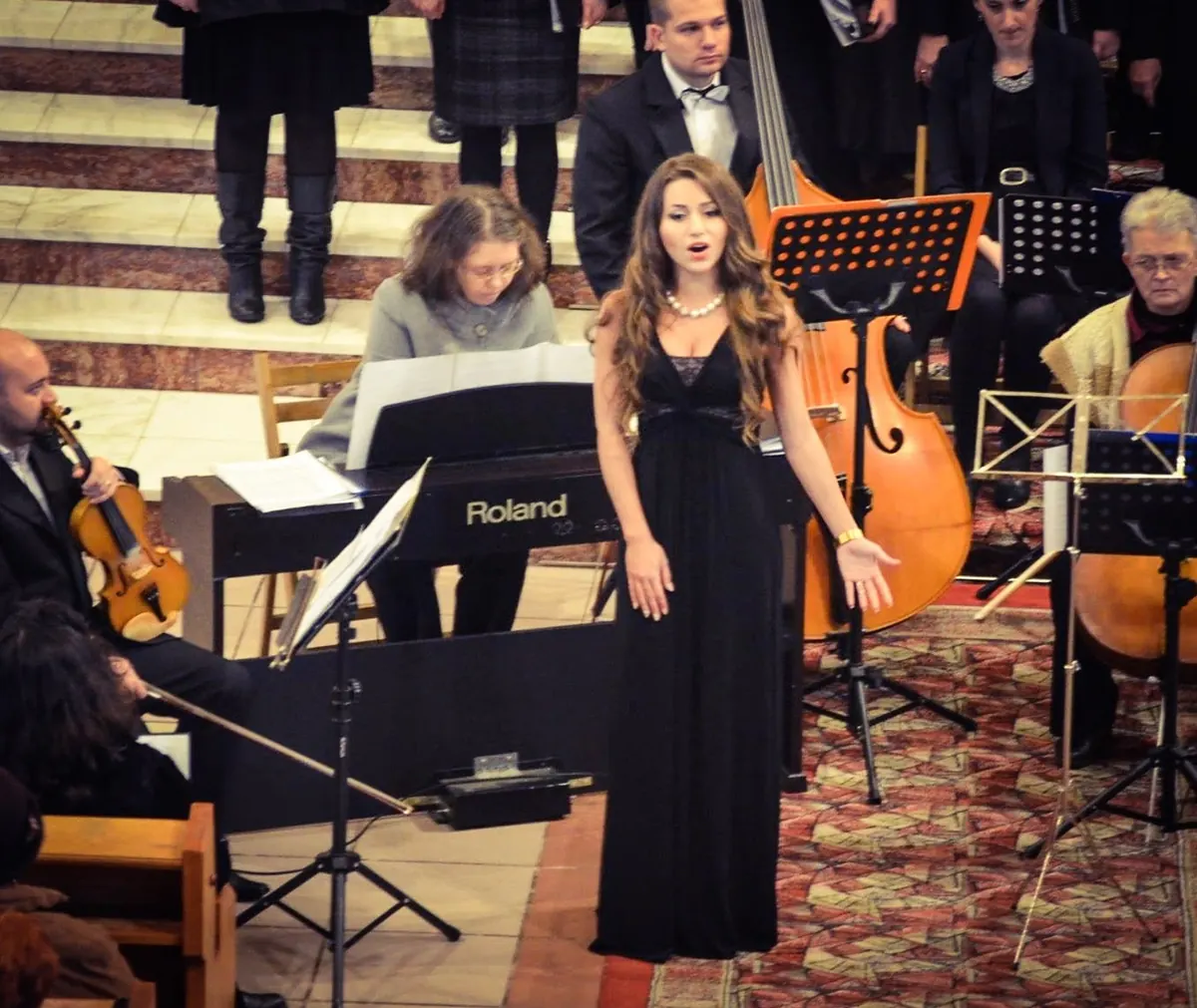
Two years later I was admitted to the Gheorghe Dima Music Academy in Cluj — one of the top five admitted. My classmates had been training their voices for ten, twelve years. I had one year.


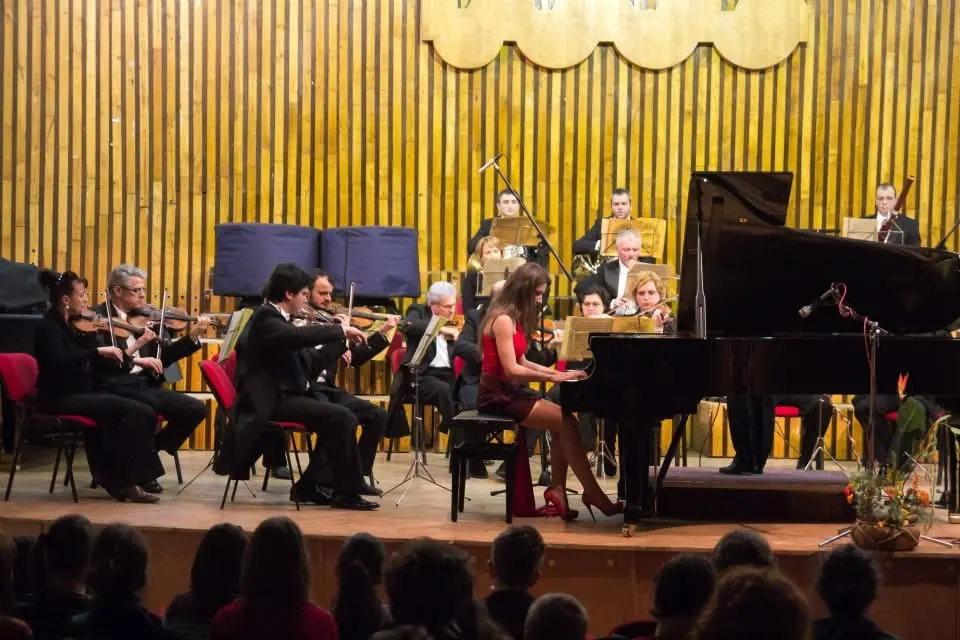
Concerts with the philharmonic and on big stages.
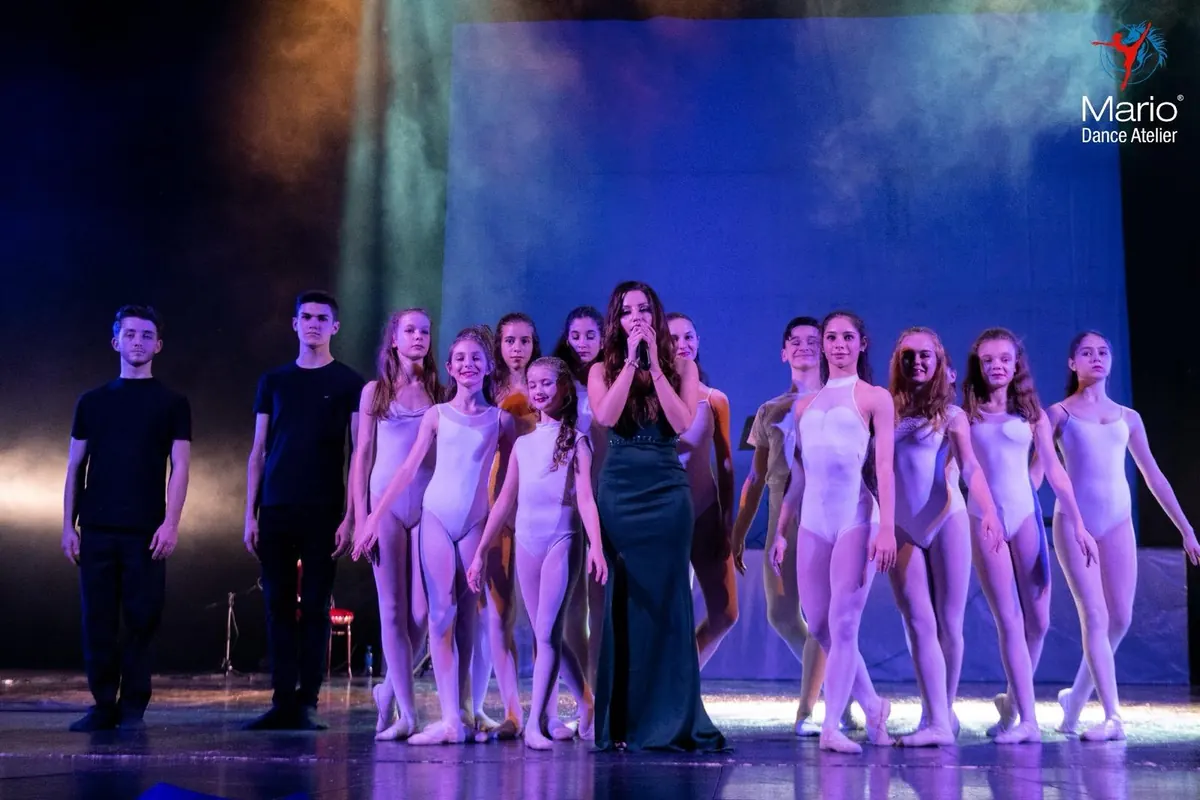
There were nineteen years on stage. Concerts, collaborations with some of Romania's biggest bands, big rooms. Nineteen years of learning, night after night, what happens to a room full of people when a sound is sung exactly right.
swipe sideways to see it all
"Ochii care nu se văd", with DJ Project. 6.1 million views.
And everyone kept asking me the same question: how is this possible? How does someone who was told she has no voice end up making a living with her voice?
I spent ten years answering that question. That's how I started teaching voice — and I taught for ten years, to people who had been told exactly what I'd been told.
Anyone with a voice to speak
has a voice to sing.
That was my creed back then. I had no way of knowing that years later, it would come to mean something else entirely.
I'm telling you all of this before the hard part, for one precise reason. What comes next is not the story of a weak person who found a lifeline. It's the story of someone who knew exactly what she was doing — whose body shut down anyway.

There was no single cause. That's the part nobody understands when I tell it. People want a culprit — burnout, the stage, a loss, something. It wasn't like that.
It accumulated. Years of giving without taking anything back, of sleeping too little, of living in a body I used like an instrument and never tuned. Until one day, it gave out. Biologically. All of it.
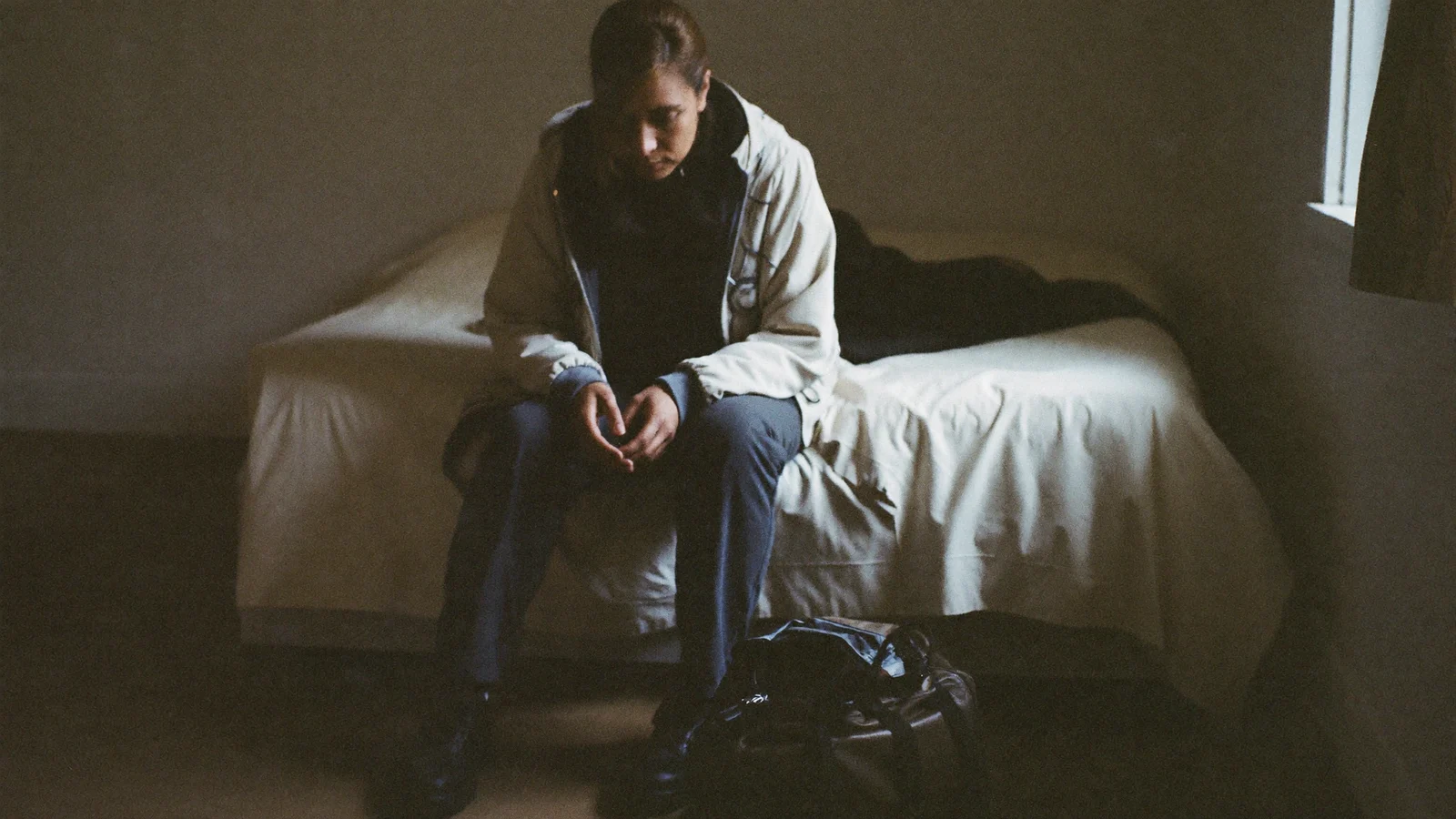
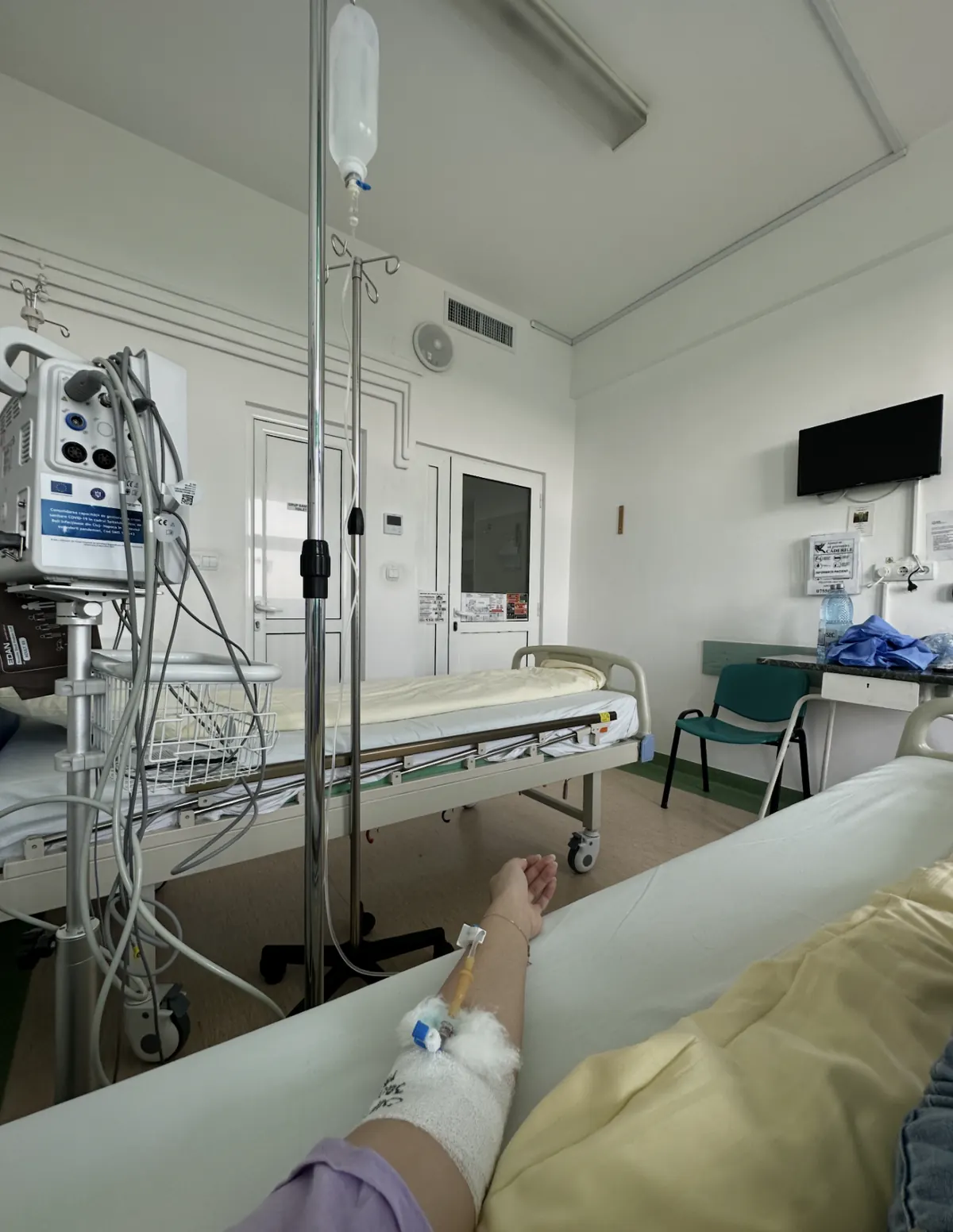
2022. The infectious disease hospital, Cluj.
Everything hurt. Not in one place — everywhere, at the same time, with no logic I could explain to a doctor in three sentences.
And I went to specialists. Not a family doctor — specialists, for every single thing that hurt. Labs, scans, referrals, more scans.
There's nothing wrong with me. Every result comes back fine. And I still can't get out of bed.
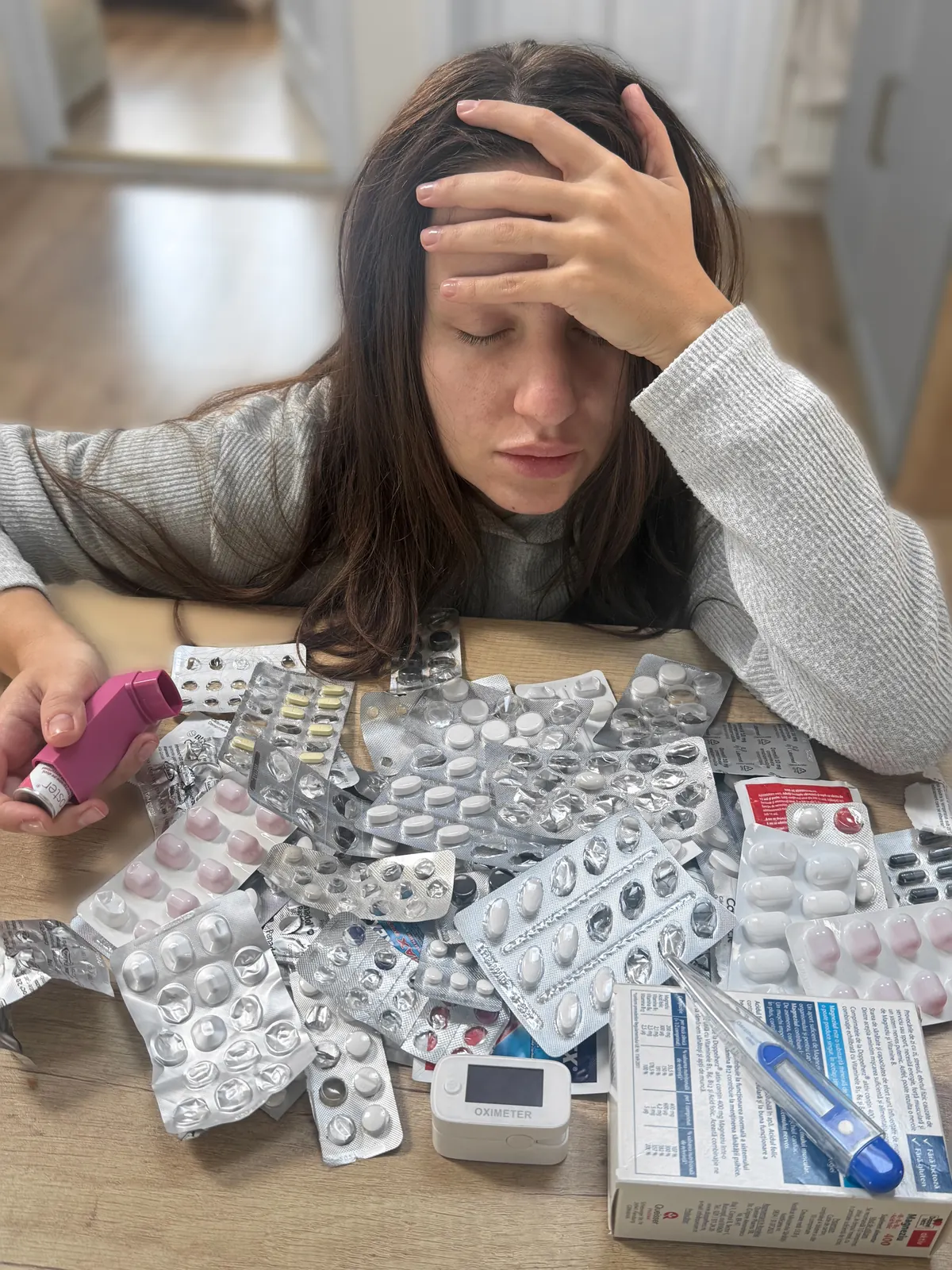
What I was taking back then. Nothing in this photo is what got me out.
If you've been through this, you know it's worse than a diagnosis. A diagnosis is an enemy. "There's nothing wrong with you" is a room with no doors.
When medicine told me it had nothing left for me, I didn't go back to music.
There was nothing to go back to. I had quit teaching. I had given it all up. There was no stage anymore, and no students.
I came back to sound in a completely different way:
Not as my profession. As medicine.
And not just any sound. That's the part that took three years.
I had one advantage over anyone starting from zero. Nineteen years on stage had given me something no weekend course can teach: I knew what a sound does inside a body, because I had produced it myself, thousands of times, and watched what it did to an entire room full of people.
Only now I wasn't looking for what moves a room. I was looking for what moves a nervous system.
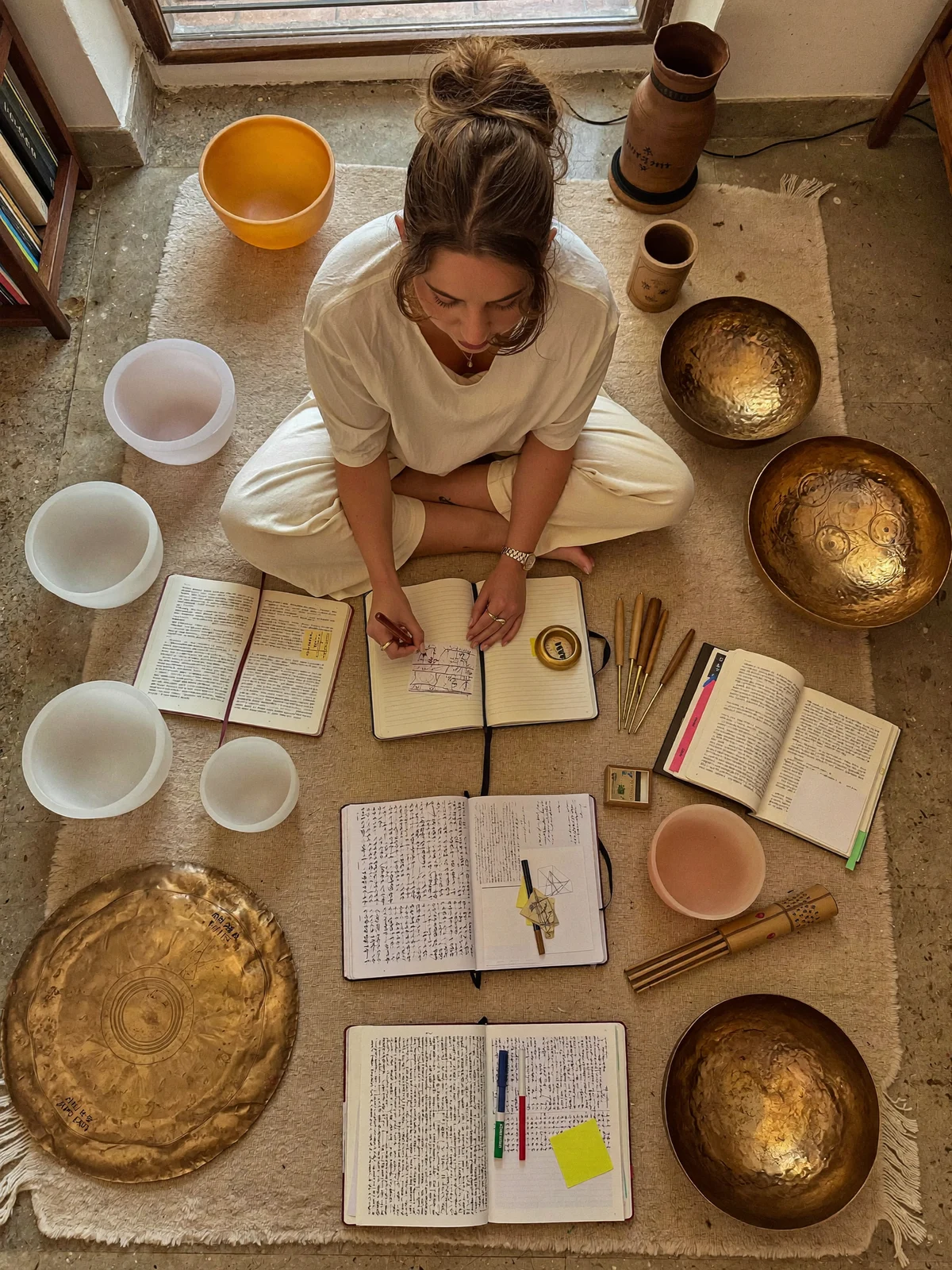
Three years. The physics of sound. Resonance. Cymatics. What happens with water. What happens with the nervous system. Therapeutic instruments, one by one, until I understood what each one does and — more importantly — what none of them does alone.
The instruments. All of them accompany me. None of them leads.
I tested everything on myself. Day after day, for years. I cut what did nothing, kept what moved something, started over dozens of times.
And at the end of it, I ran into something I wasn't looking for.
The instruments were never the main instrument.
The voice was.
After those three years, I started singing again. Not on a stage. Outside, alone, for myself.
And the animals started coming.
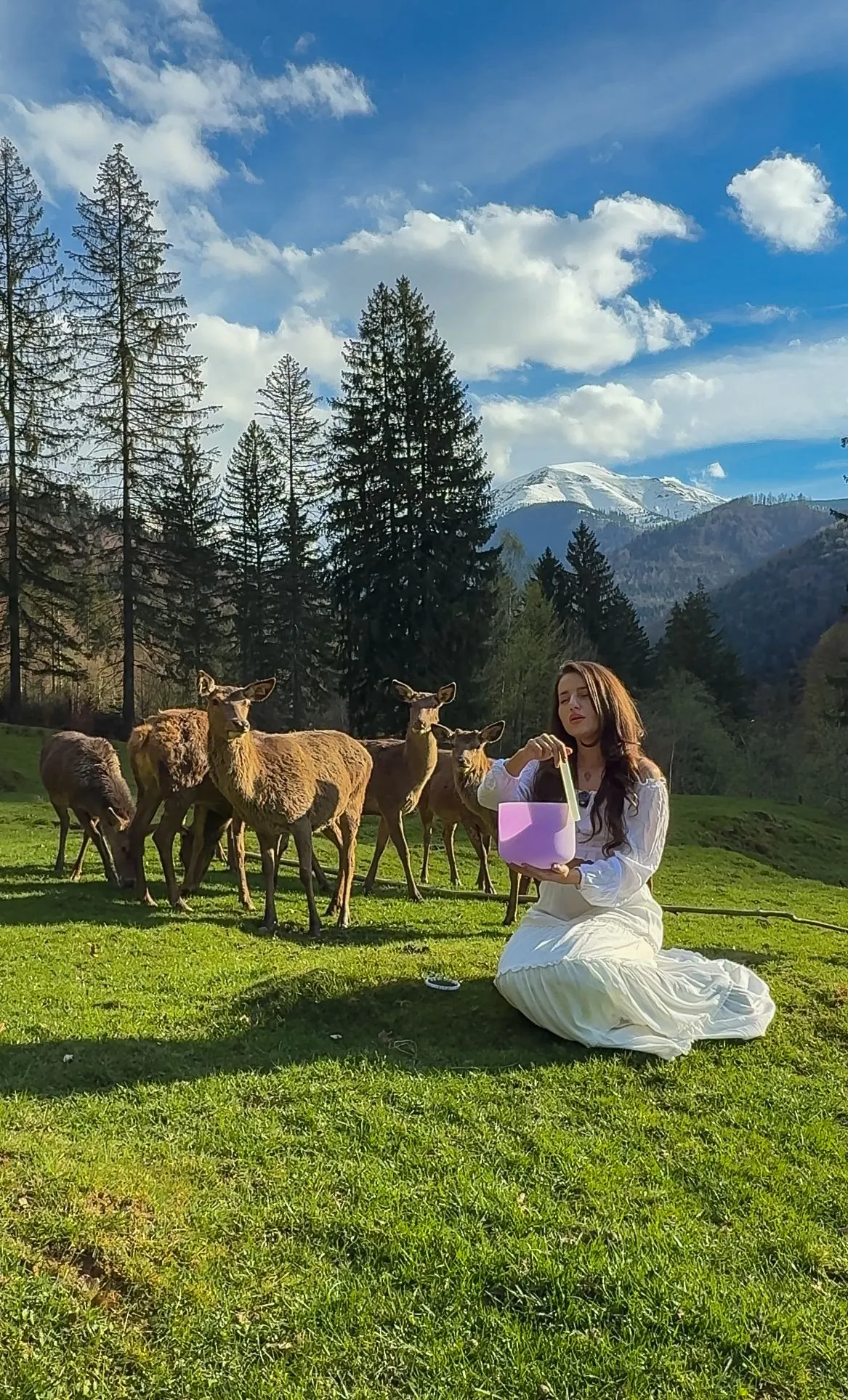
The first was a deer, in summer, at sunset. She came out of the forest, walked closer, and stayed as long as I sang. I filmed it, because nobody would have believed me otherwise. I wouldn't have believed me.


Then stags, in the mountains. And dolphins in open water, gathering around the boat.


Cows crossing the pasture. Swans coming to the shore.


Buffalo stopping at the fence. Horses.
They come. Every time. They come close, they stop, they settle. I didn't stage a single one of these videos — and I couldn't if I tried.
A deer doesn't know who I am. A cow hasn't heard my story. A dolphin has no expectations about results. You can't plant an idea in a wild animal's head.
If this were just suggestion, the animals would leave.
They come.
That's when I understood it wasn't in my head. Something real was happening, outside of me, that I couldn't explain yet.
First on myself. Then on whoever asked.
I never advertised. People came because someone told them to.
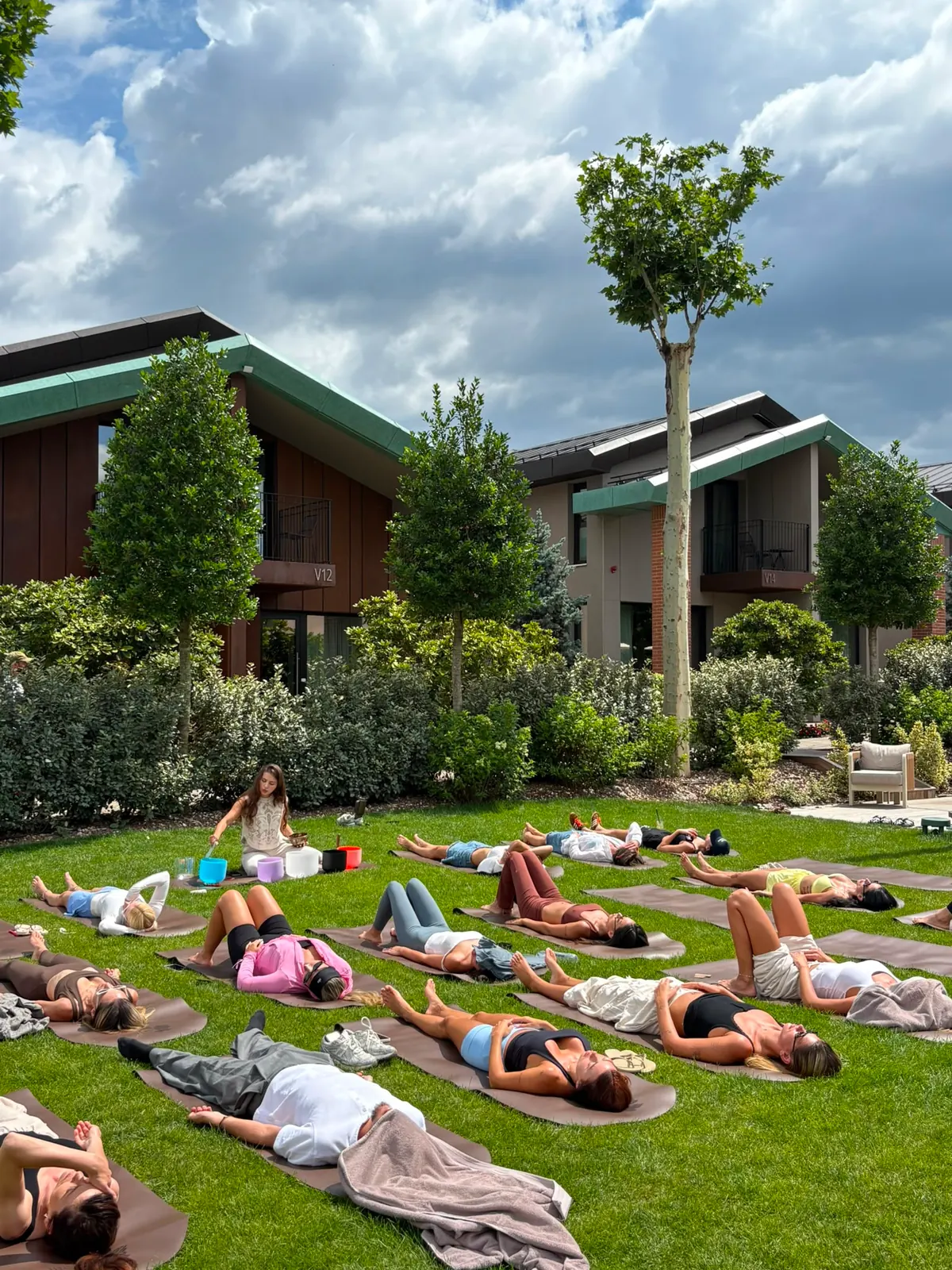
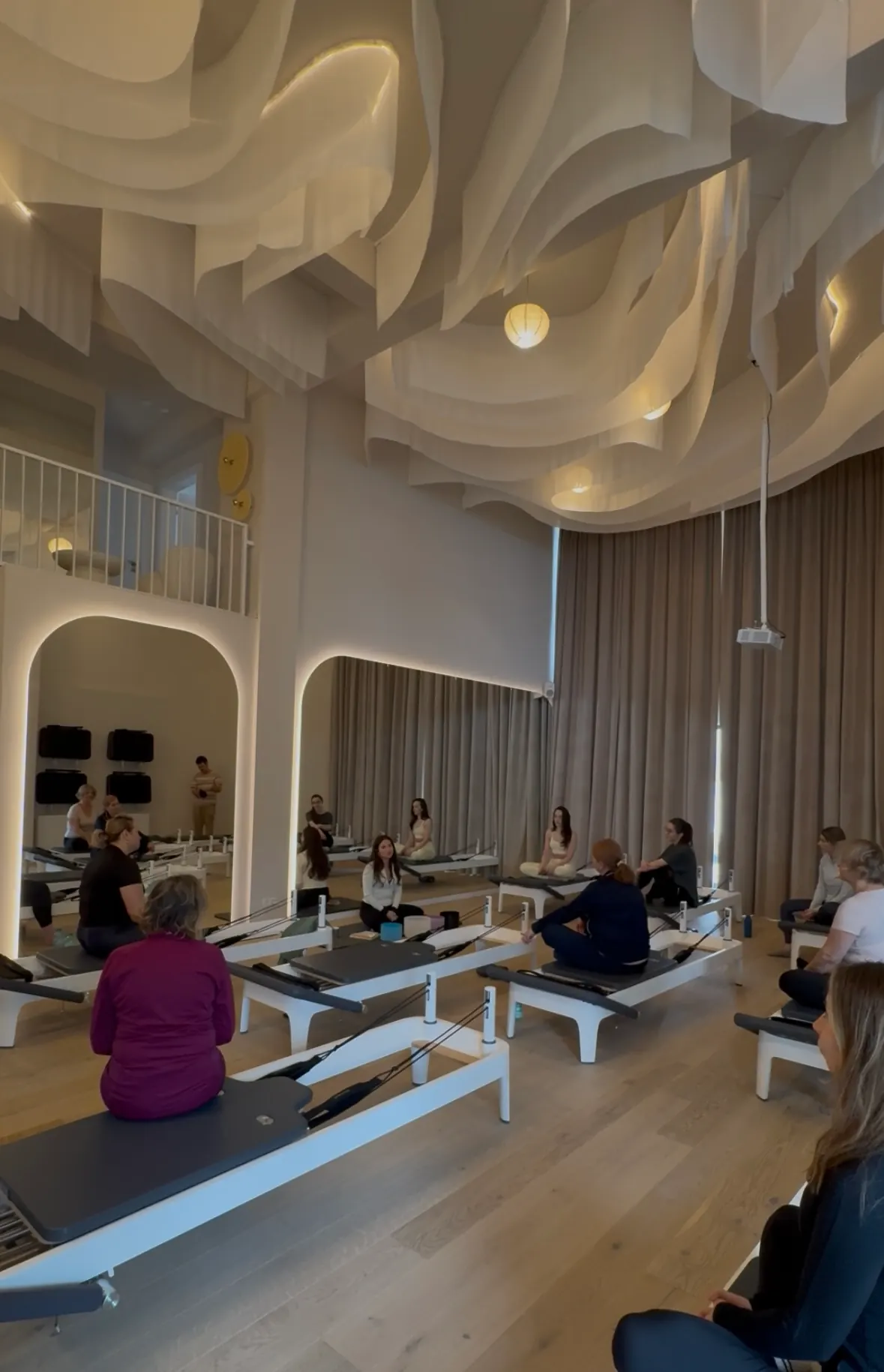
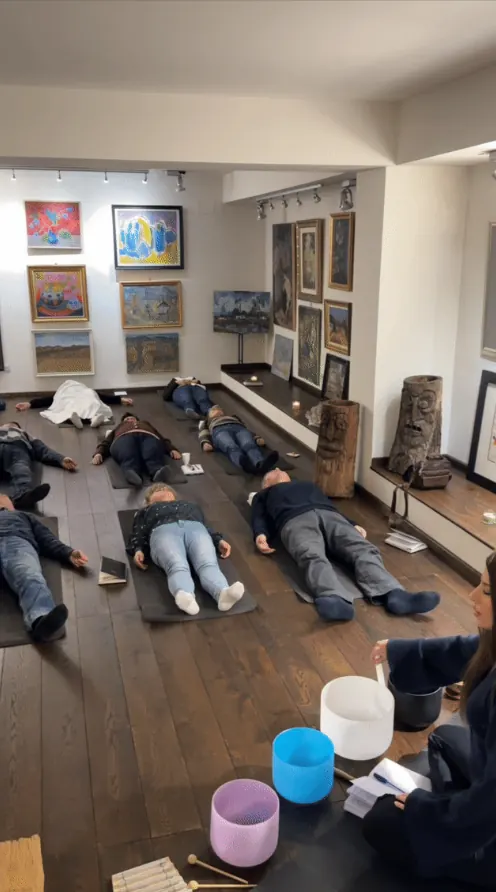
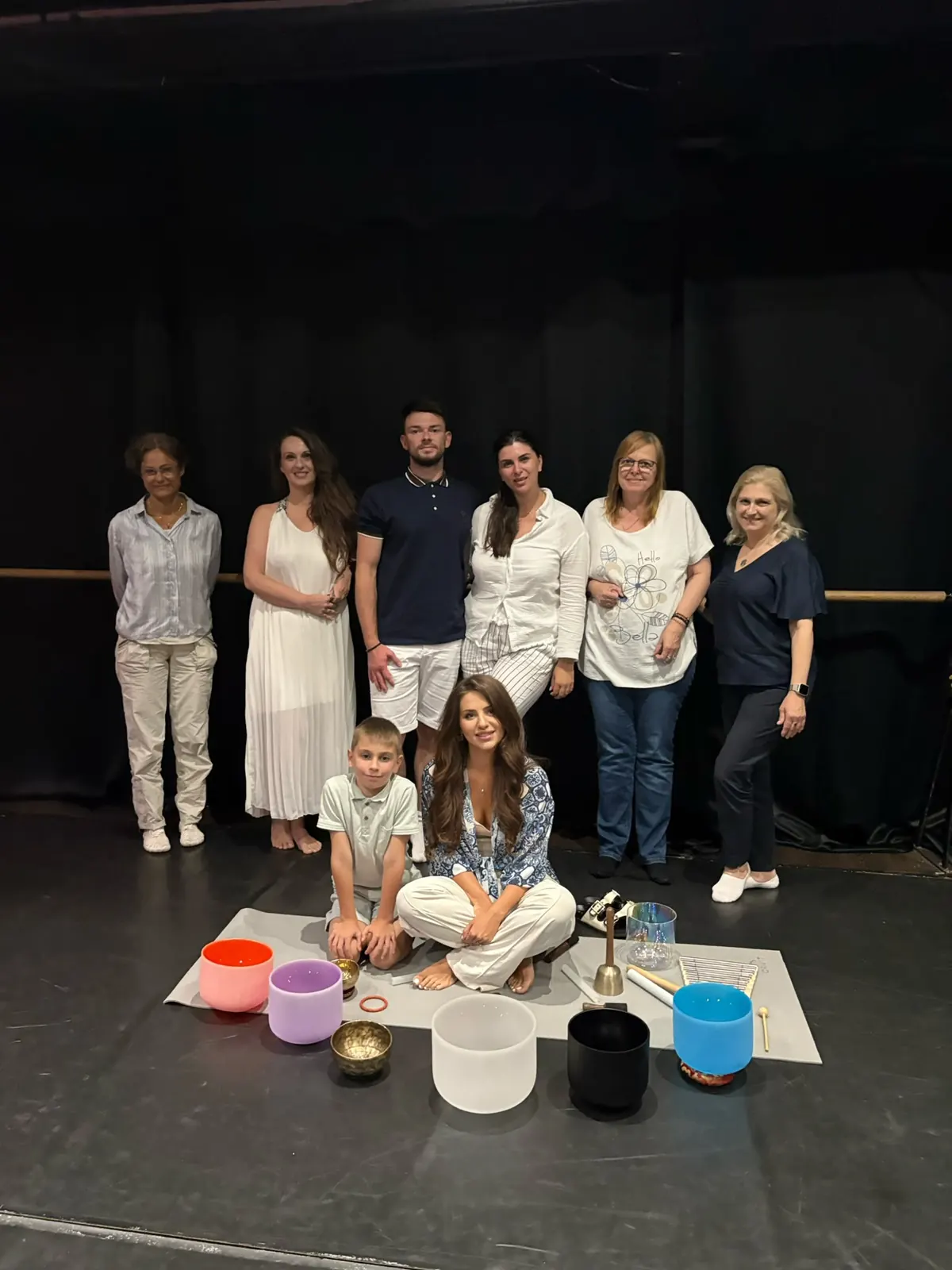
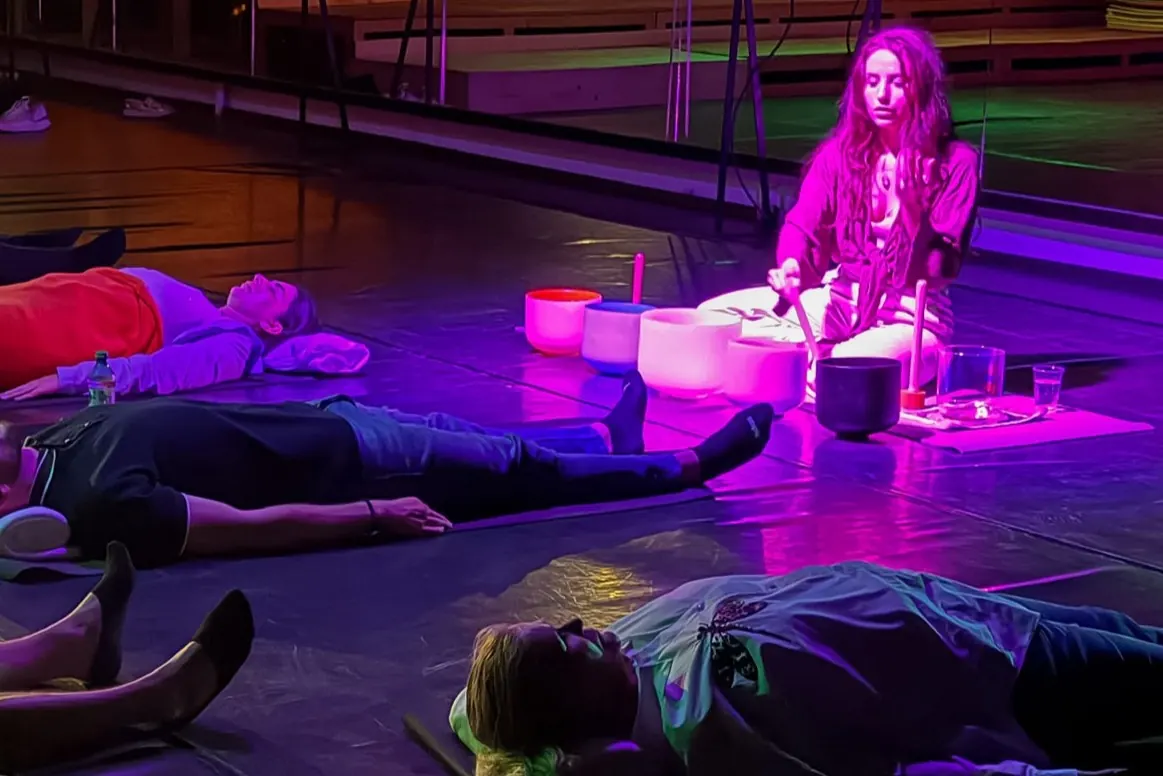
It grew into one-on-one sound therapy. Then group sessions. Then events with dozens, then hundreds of people in the room. Eventually, well-known people I had never sought out were inviting me to hold sessions.


Group sessions.
By now, 10,577 people from 24 countries have been through my sessions.
Translation
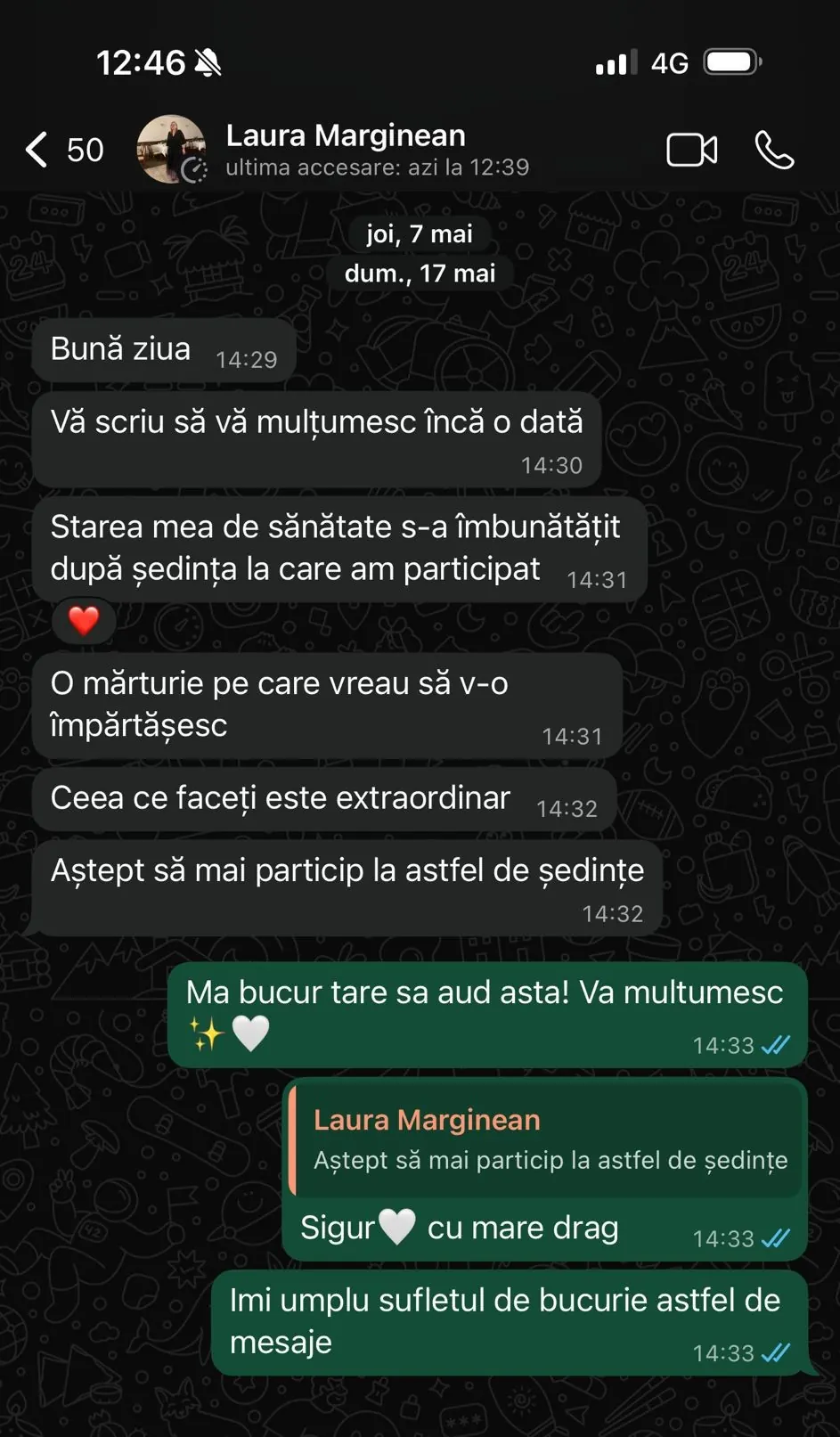
„Good afternoon. I'm writing to thank you once again. My health has improved since the session I attended. ❤️ A testimony I want to share with you. What you do is extraordinary. I look forward to attending more sessions like this."
Laura Mărginean · after a group session
The number isn't the important part. This is:
People come back. And they bring someone with them.


I know exactly what's going through your head right now, because it went through mine: a room full of people who want to believe can feel anything.
You're right. That's why I didn't stop there.
From results to data
Thousands of people with results. Animals showing up. I knew it worked.
What I didn't have was something else: the same things, in numbers.
So I ran measurements — spectrum analysis, resonance, brain activity. Machines, data, images.
Four measurements. In the order I did them.
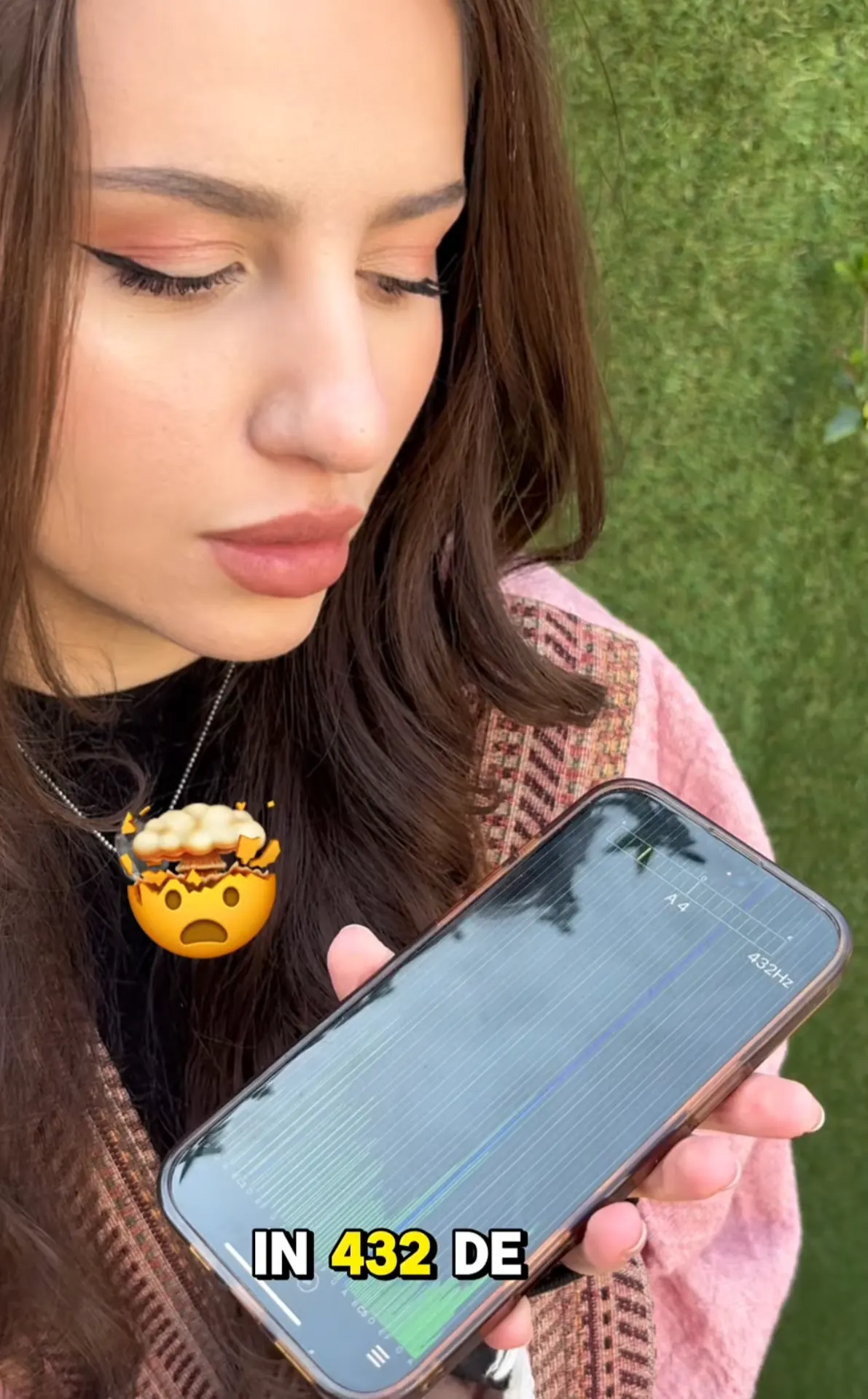
Instrument measurement
The first thing I looked for were the two frequencies everyone has heard of. It reaches them both: 432 Hz and 528 Hz.
But that was the small part — the boring part, honestly. The interesting part was everything else that was there: a whole set of other frequencies nobody on the internet talks about, far more complex and more powerful than the two famous ones.
They had been there for thirty years. I heard them every time I sang. I didn't know they could be counted.
And this is the difference no instrument and no software can cover:
An instrument gives you one note.
A voice gives you dozens of frequencies at once.
A computer-generated tone is mathematically perfect and completely dead: one frequency, no overtones, no body. A human voice produces, in a single note, an entire architecture of stacked frequencies. That's why you recognize your mother on the phone in two syllables — not by the note, but by that architecture, which is hers alone.
Unedited video
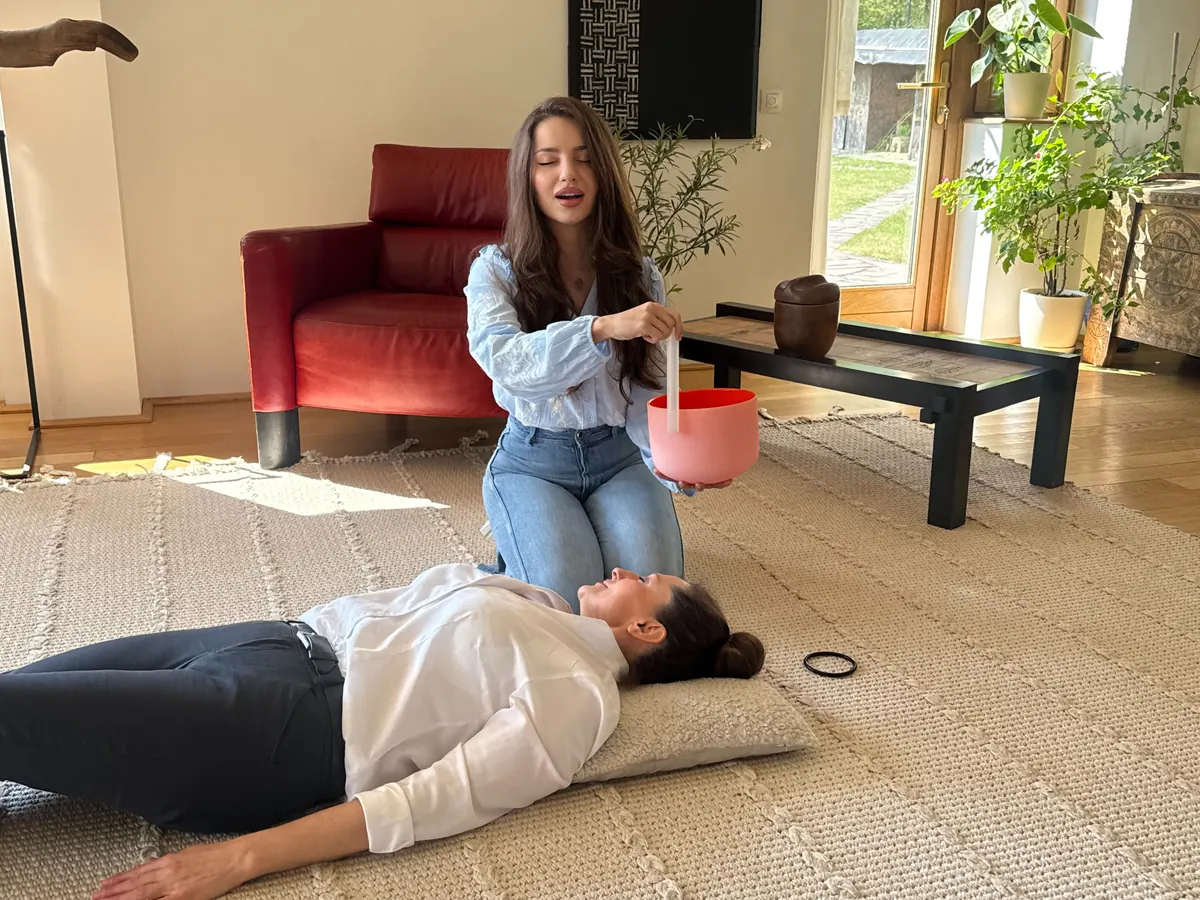
My hands are visible in the frame the entire time. I touch nothing. The bowl starts to sound.
It's called sympathetic resonance, and it's pure physics, centuries old: an object starts vibrating when it receives its own exact frequency. There's nothing mystical about the mechanism.
What's rare is a person who can produce that frequency precisely, sustained, with the voice. Miss it by a few hertz and nothing happens.
Filmed experiment
A bowl. A membrane stretched tight across it. Glitter on top. That's it.
The moment I sing, the glitter starts vibrating and rearranges itself. Not randomly: into stars, circles, mandalas. Some of the patterns are so complex that even I couldn't reproduce them twice.
This isn't my discovery. The physicist Ernst Chladni showed it in 1787, with sand on a metal plate. The difference: his plate vibrated. Here, it's my voice.
And the complex patterns appear precisely because the tone is pure. An impure tone doesn't make a figure — it makes a mess.
The last question left was the most important one: fine — but what happens inside a person?
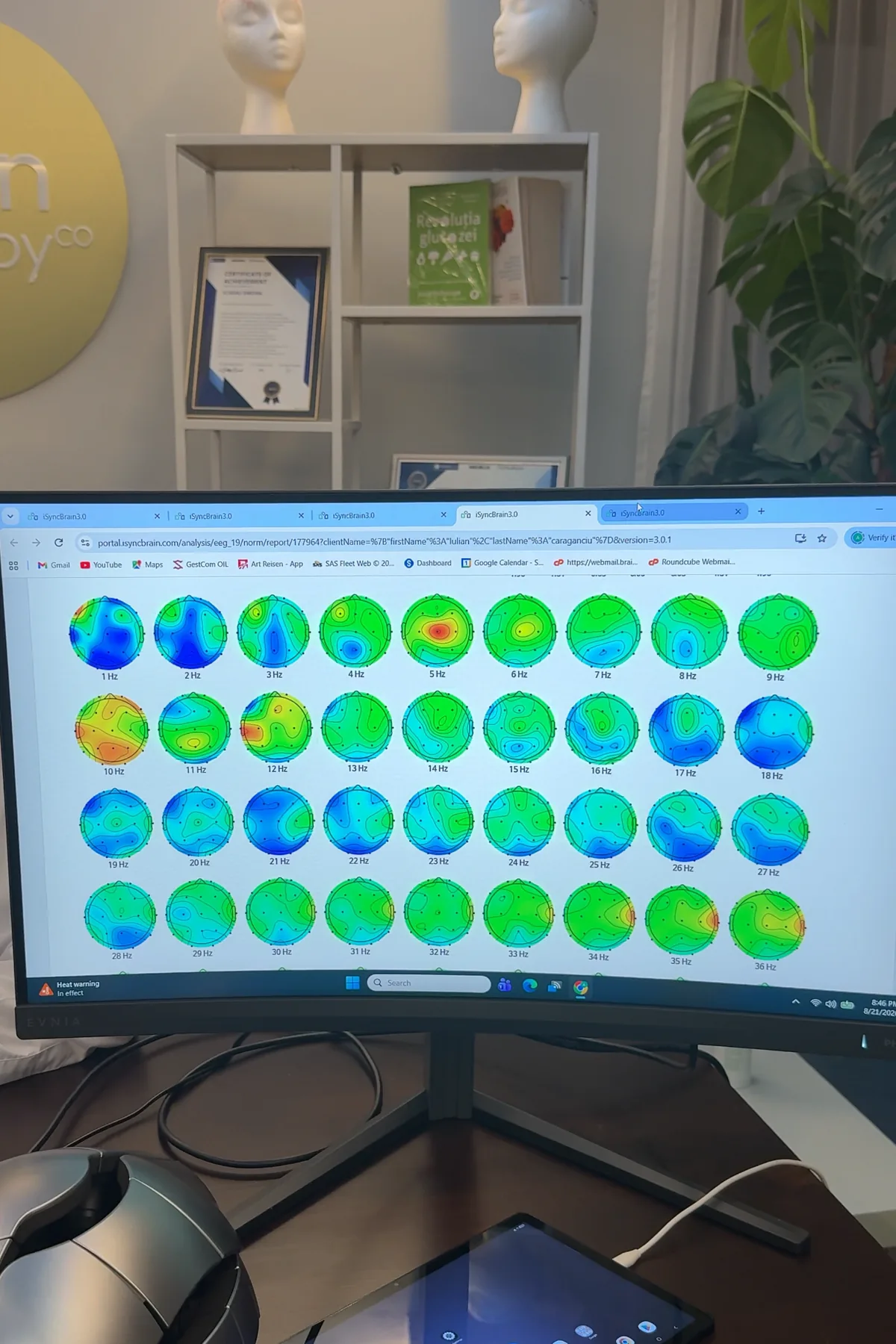
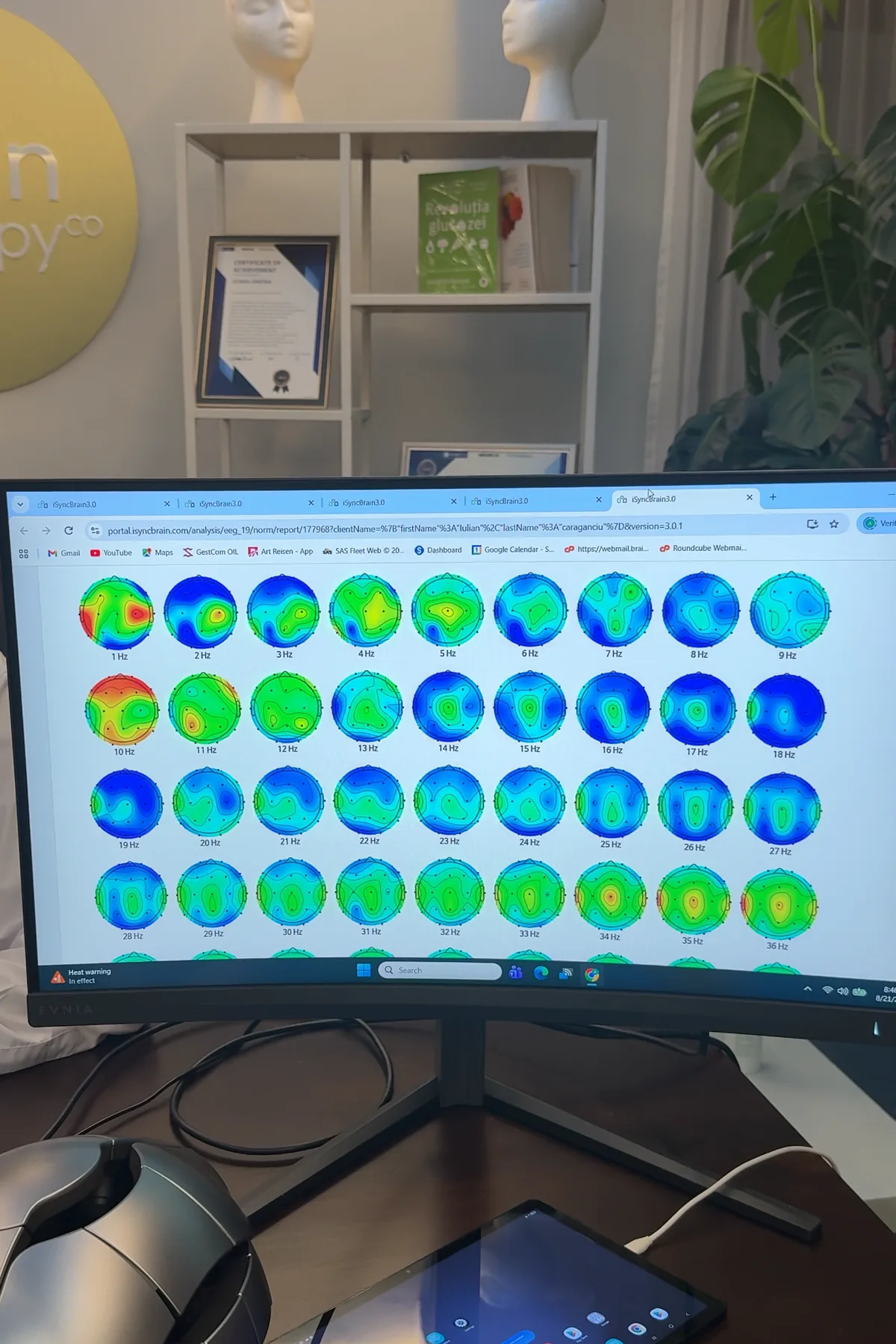
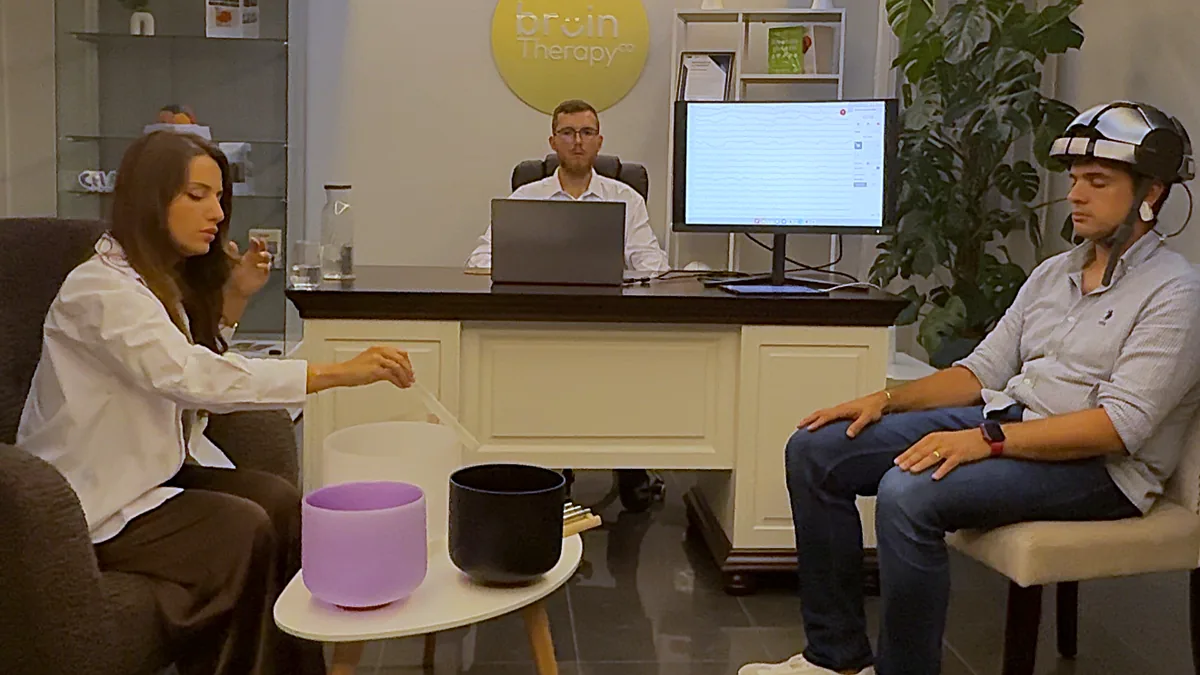
So I went to a clinic and did brain mapping — measuring brain activity before listening to the frequencies, and after.
I didn't interpret the results myself. They were read and compared by Denisa Scripcaru, a licensed clinical psychologist specializing in brain mapping, with no connection to the product. You can clearly see the neural activity relax.
I couldn't believe it. You could see it.
The sound healing session worked like a "reset" button for the nervous system: it lowered the level of hyperactivity in the brain and brought it to a much more neutral and rested state.


One person, one session, measured with instruments and read by a specialist. It is not a clinical study and is not presented as one.
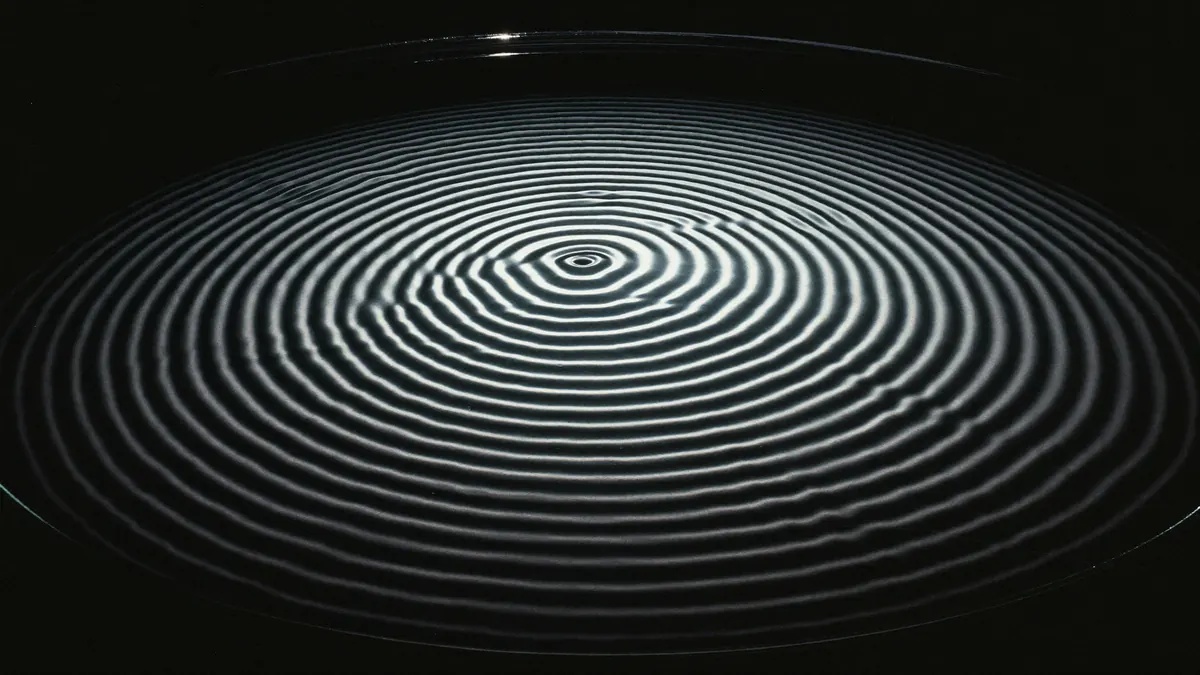
What you see in the bowl isn't a metaphor. It's what sound does to any matter it touches: it organizes it. Vibration doesn't scatter particles at random — it gathers them into stable patterns.
Now hold on to two simple facts nobody disputes:
Sound doesn't stop at your ears. It passes through you. And you are, mostly, the exact medium it travels through best.
Each bar shows how much published research exists in one field. They're drawn to scale against each other — so you can compare them at a glance.
WHO synthesis, arts & health
over 3,000 studies
Recovery after surgery
73 randomized trials · The Lancet
Anxiety
multilevel meta-analysis, 2025
Calm before surgery
Cochrane review — in one trial, music outperformed a sedative
Sleep
Cochrane review, 13 trials
Recovery after stroke
Lancet Neurology + daily listening
Movement & rhythm
meta-analyses through 2025
How it came to be
I got that question at the end of every session, for years, from almost every person.
The session would end, people would lie there not wanting to get up — and then they'd come to me with the same sentence: what I just felt was extraordinary — how do I get this at home?

A private event in a cave in Tenerife.
For years, I had no answer. It couldn't be done. I had to be there — the voice, the instruments, in the room.
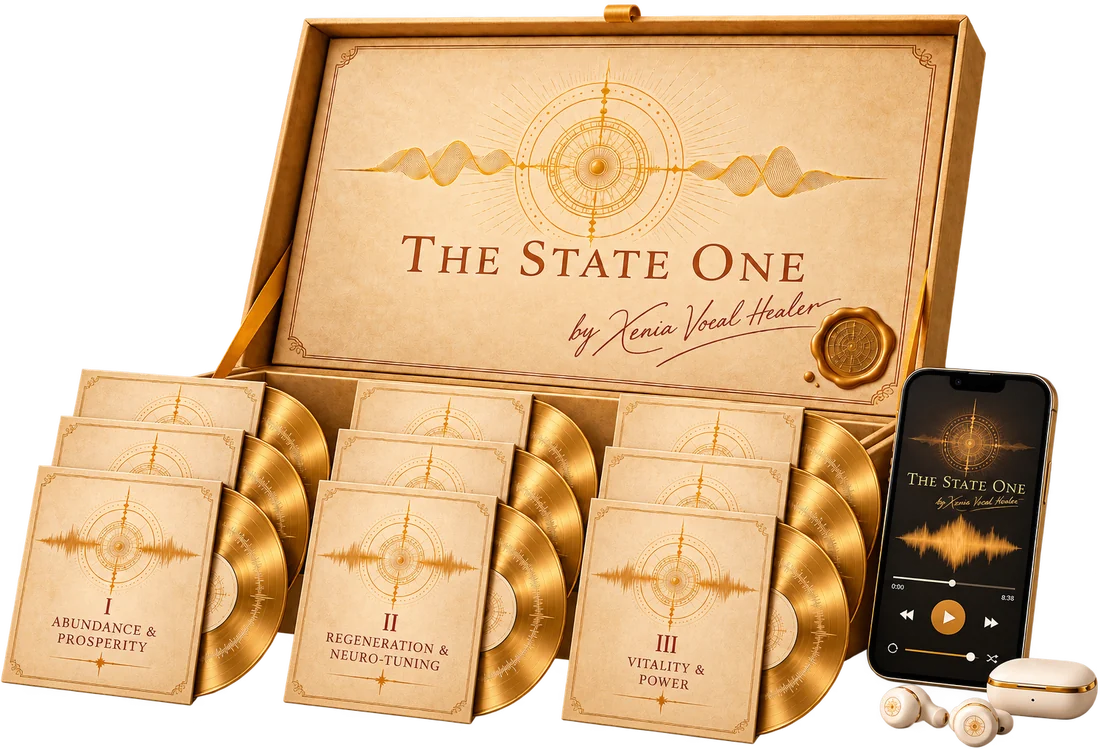
The State One is the answer to that question.
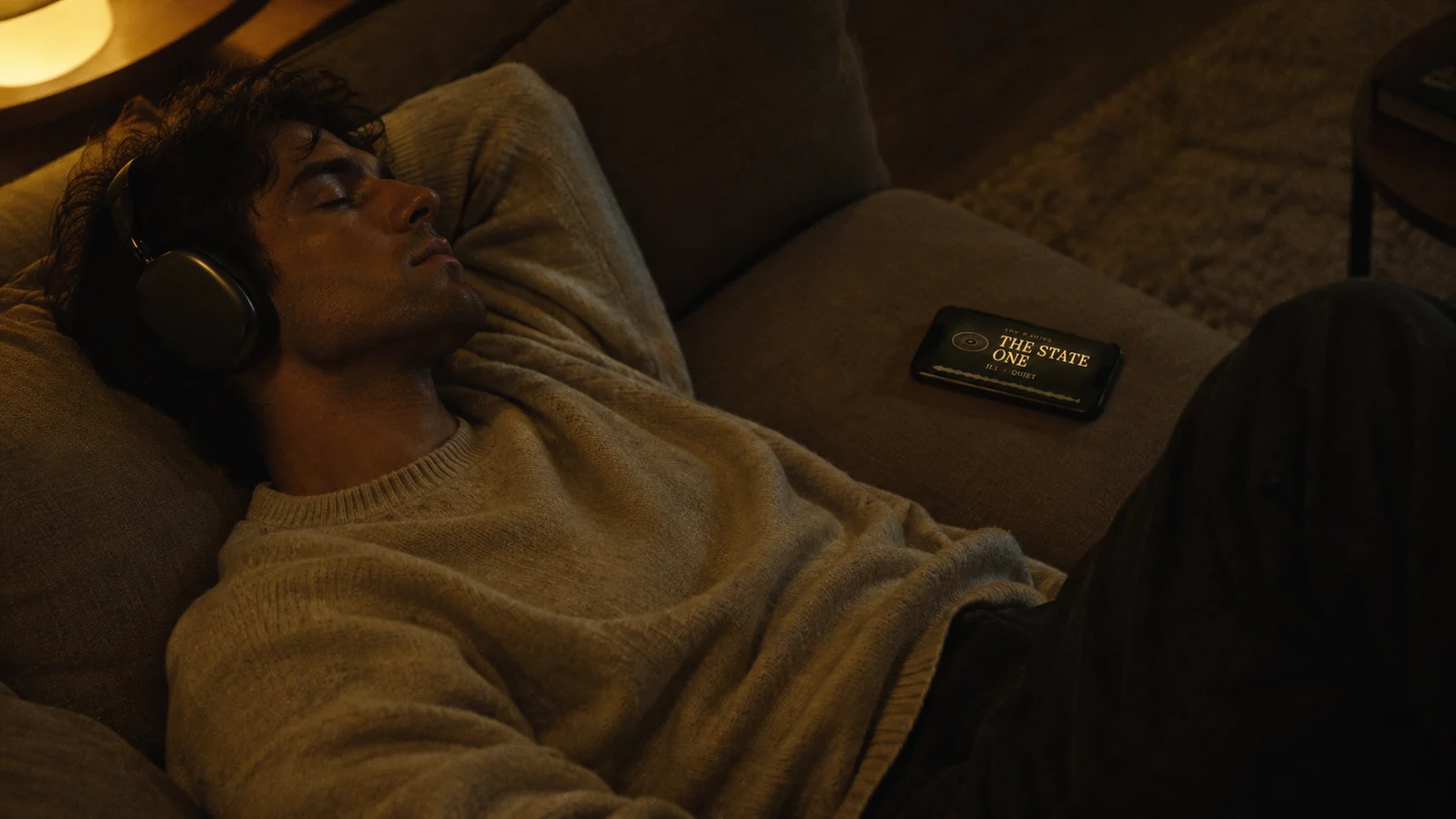
It's not a recording of a session. It's a session built from the ground up to work without me in the room — with everything I learned in three years of study, everything I measured, and everything I watched work on hundreds of people.
On the internet, a "frequency" is a tone spit out by software. A number, held for eight hours.
Mine has five layers.

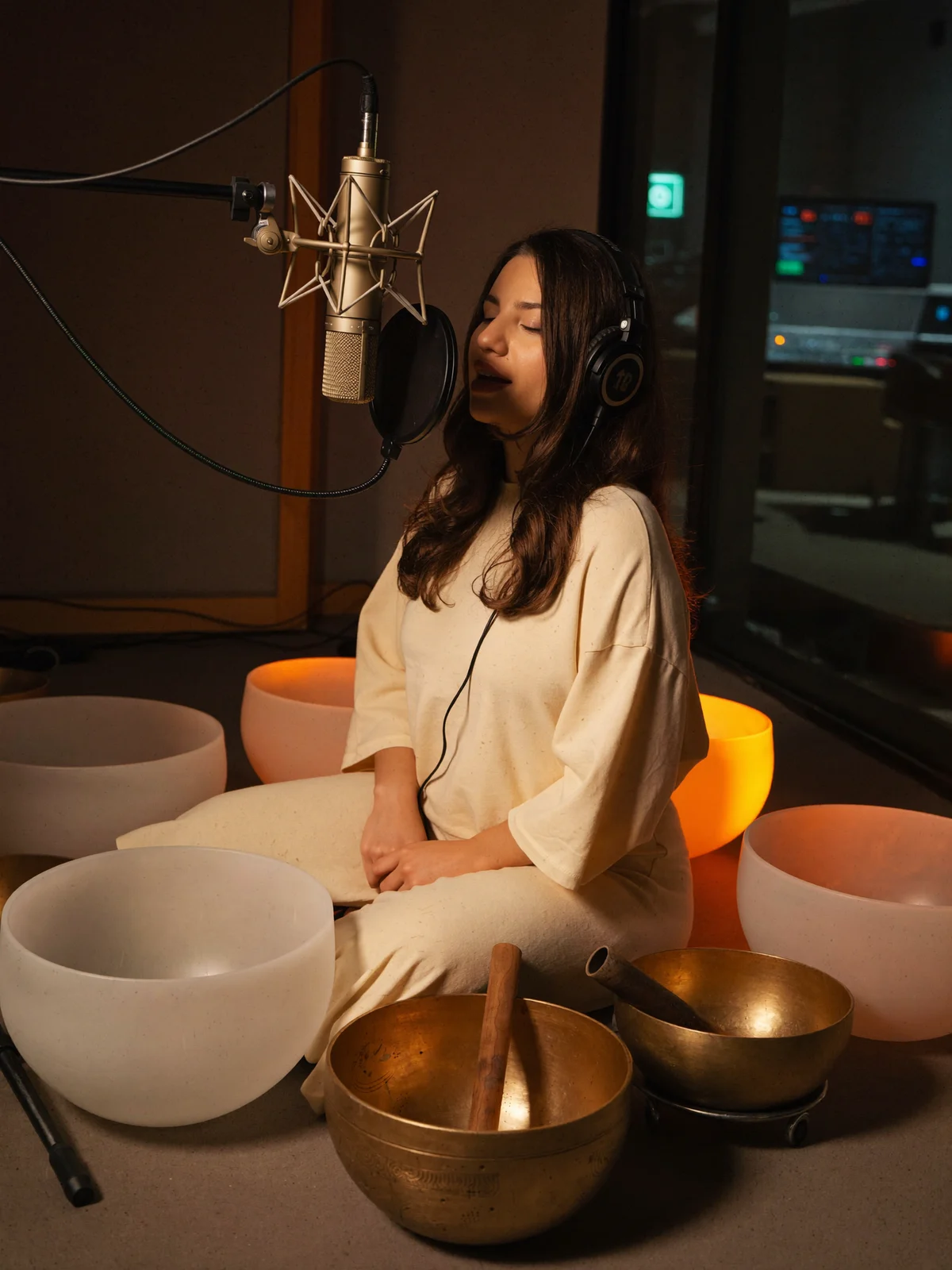
A real voice, not a generated tone. Dozens of frequencies at once, including the ones no instrument reaches. It leads the entire piece.
Crystal bowls, handpan, gong, chimes. Each one chosen for the range it supports under the voice. They accompany me. None of them leads.
Built in phrases, with real pauses. Your breathing synchronizes on its own with what you're listening to. A continuous drone gives it nothing to sync with.
Each frequency is recorded from a specific state, held from start to finish. The same note, sung from two different states, is not the same note. You can hear it.
The layer you can't hear: what you do before you put your headphones on, how you breathe while you listen, what you do in the minute after.
Layers one through four, you hear. The fifth one, you do.
Without it, you have music. With it, you have a practice.
If you've tried things before and felt nothing — it wasn't your fault. It was the file.
Here, you're not getting a file. You're getting back the morning you woke up with energy. The steering wheel you used to sing at. The sleep that came the moment your head hit the pillow.
In other words: the state. The one everything started from.
What you get
It's called that for a simple reason. State one is the state you started from — the one you were born with, the one where you woke up with energy and fell asleep the moment your head hit the pillow, the one you lost without ever knowing which day it happened.
That's what you're buying. Not nine audio files. State one, back.
Three chapters. Nine frequencies. Each exactly seven minutes, recorded with my voice.
The three within a chapter aren't three different things. They're three roads to the same state. You rotate them until you find yours.
CHAPTER I
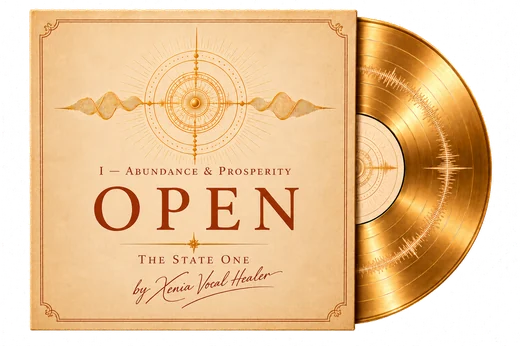
How they're built: the most open register in the whole package — voice up high, long phrases, the big bowls underneath. These are the pieces that widen you, not calm you. Listen in the morning, before a day when you have to ask, decide, or walk into a room.
OpenFor the morning you wake up already on the defensive
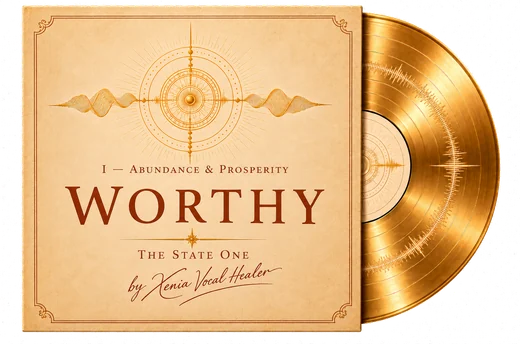
WorthyFor the days you have everything you wanted and still feel it isn't yours to have
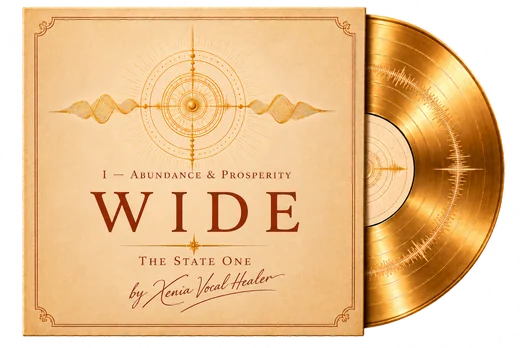
WideFor when everything has closed in and all you can see is the next stepCHAPTER II
How they're built: the slowest in the package, low frequencies up front, with the most and the longest silences — that's where the work happens. The phrasing is designed to slow your breathing without you asking it to. Listen in the evening, or on the day you have nothing left.
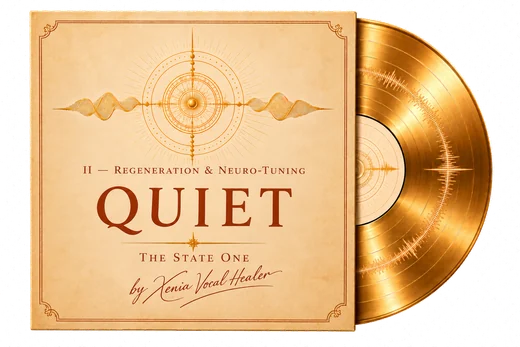
QuietFor the mind that won't stop even when the body is in bed
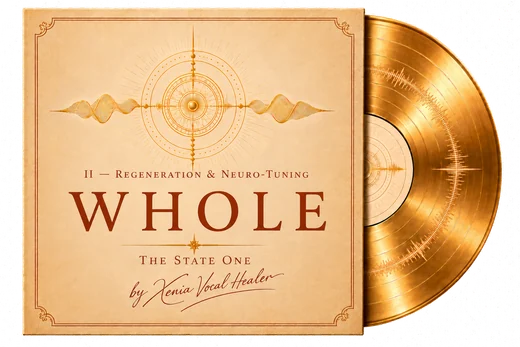
WholeFor the days you feel like you're running in pieces
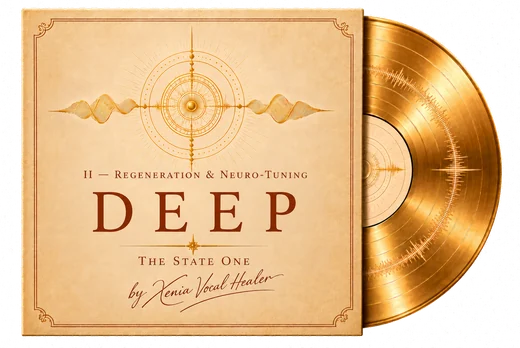
DeepFor the tiredness that sleep doesn't fixCHAPTER III
How they're built: the densest — full voice, the instruments most present, short phrases that build. They don't agitate you and they're not hype music: they gather you. Listen before the thing you have to do, not after.
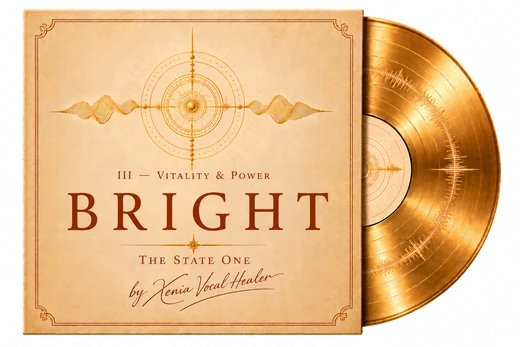
BrightFor when you have everything you need and none of it lights you up
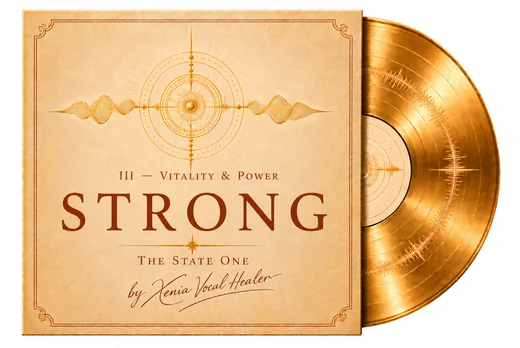
StrongFor right before the room where you need to be all of you
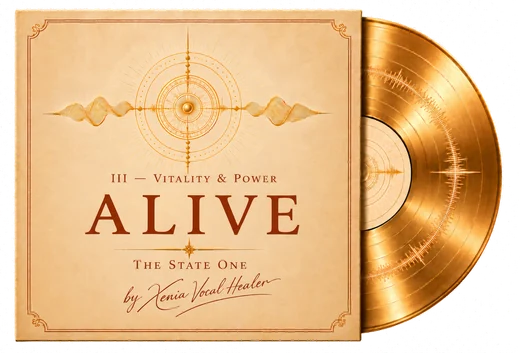
AliveFor the day you want to feel something again — anythingLimited offer · launch price
Product value $1,125+
Or keep reading — I'll show you why it works.
You've probably tried a few things already. Here's why they stopped working — and no, it's not because you lacked discipline.

They ask you to quiet your mind with your mind. That's like trying to stop a car by pushing from the inside.
A continuous drone with no phrases and no silence. Your nervous system files it under background noise within two minutes and stops hearing it.
They fix a deficiency, if there is one. They can't do anything for a nervous system that hasn't stood down in four years.
They discharge the tension in your body. Great. But the next morning, the state is right where you left it.
It works. For ten days. Then you come back to the same room with the same phone, and within forty-eight hours you're right back where you were.
None of them spoke the language your body understands without translation. Sound doesn't go through the mind. It reaches the nervous system directly, in milliseconds, before you've had time to form an opinion about it.
Sound alone is half the job. I learned that the hard way, in the first months, listening for hours while nothing changed.
Goes straight into the nervous system, in milliseconds, without passing through the mind. There's nothing to get wrong and nothing to understand.
The only voluntary lever you have over an involuntary nervous system. I built my own technique for this, with an exact rhythm — you'll find it step by step in the protocol. The sound gives you the phrasing; your breath follows it.
The part people call placebo, like it's an insult. It isn't. It's proof that what you believe about what you're doing changes what happens in your body — so well documented that every drug in the world has to be tested against it.
And one more thing, which matters more than it sounds.

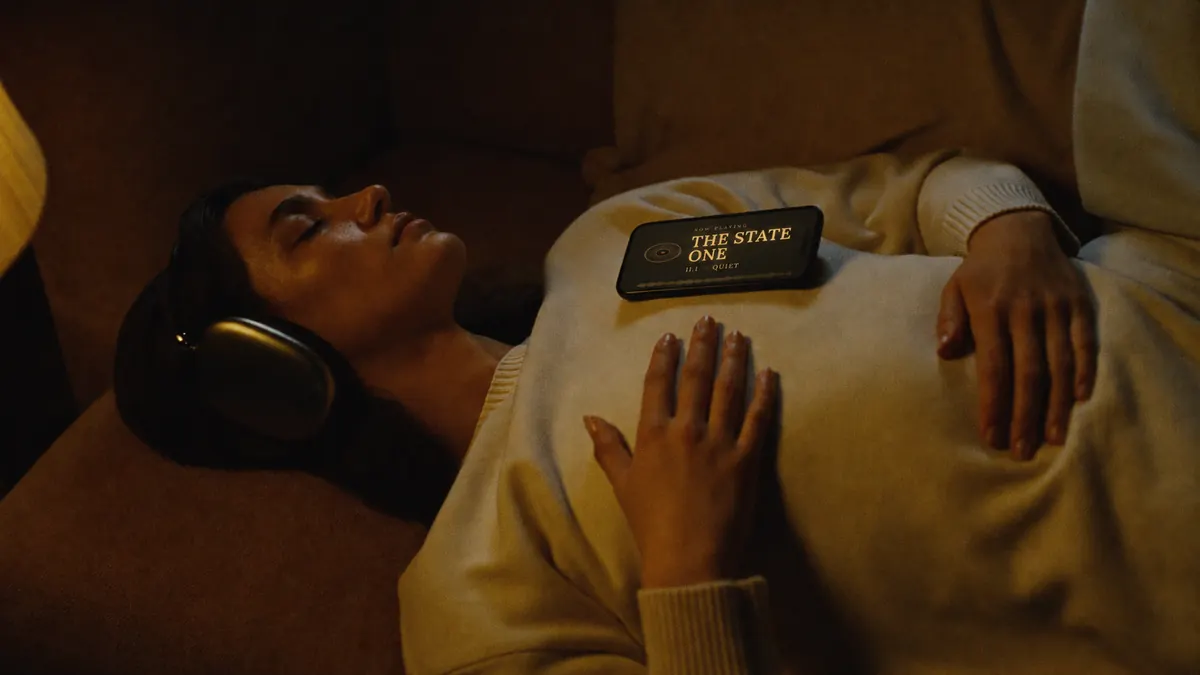
The sound starts working from the first second.
It doesn't need your permission and it doesn't wait for you to believe in it. It reaches your nervous system before you've had time to form an opinion.
What differs from person to person is when you feel it. Some feel it in the first session. Others need a few days, sometimes a few weeks — completely normal, because every body arrives with its own history.
In the brain and in the body, the change is happening either way.

I've shown you the glitter, the bowl, and the brain. Those you can see and measure.

But if I stopped there, I'd be hiding half of what I do.
When I record, I don't perform a note. I enter a state and sing from inside it. I did this for nineteen years on stage, in front of full rooms, and anyone who has ever sung knows exactly what I'm talking about: the same note, sung from two different states, is not the same note.
Call it whatever you want. I call it magic, and I have no problem with that word. It happens in the room when I sing, you can hear it in the recording, and it's the reason people cry at minute four without knowing why.
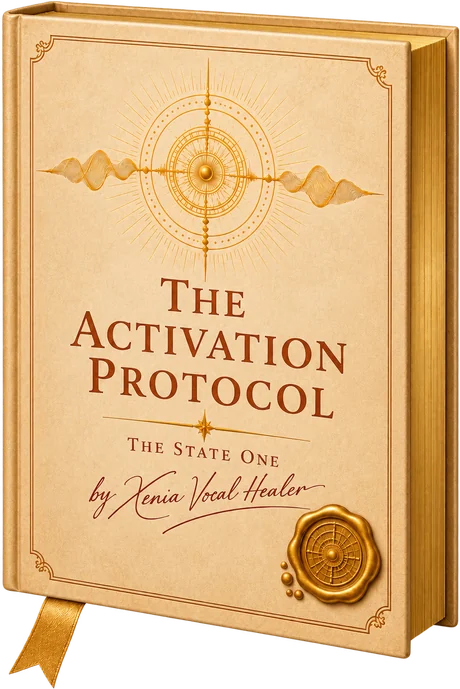
The Activation Protocol. The breathing technique, the intention, the sound, the integration, and the gratitude — step by step, in the exact order they're done. Without it, you have music. With it, you have a practice.priceless
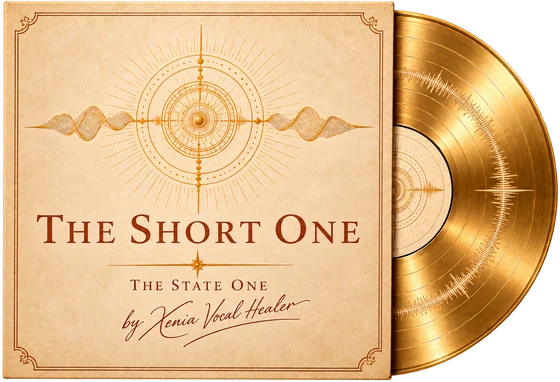
The Short One — a short frequency, two to three minutes, for the days you don't have ten. It exists precisely so you don't have the excuse.$30
The Long One — a long frequency, over thirty minutes, for the evening and for sleep.$260
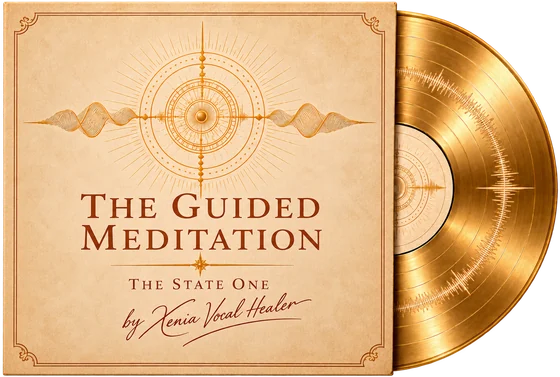
A guided meditation, in my speaking voice, not just my singing voice.$250
The private Telegram circle — where I'm actually there, not a moderator.$25/moOver one hundred and five minutes of original sound.
And over $1,000 saved.
I wanted to give you some feedback. I have been listening to the frequencies for a week. I have to admit, I was fairly sceptical at the start, but the results are incredible! For months I had not slept one whole night through, and the restlessness in my mind would not let me concentrate at all. Now I fall asleep much faster and I wake up rested. The one for calm is my rescue in the stressful moments at work. Thank you from my heart for this wonderful gift! You are a blessing! I recommend it to anyone who needs deep quiet!
— Elena, Romania
I listened to the frequencies this morning and I felt so much better. I felt the tension release from my body and I am in a state of complete gratitude. Thank you, I am so glad I found you.
— Olivia, Canada
I cannot believe it. I had a headache, and while I was listening it went away! I cannot explain it. Thank you!
— Elena Măgureanu, Romania
Since I started listening to the frequency every day I sing around the house a lot, and I have extraordinary vital energy even when I do not sleep enough at night. I have also started going back to singing lessons. The door I had closed on my voice and on singing is opening again.
— Ana, Spain
Hi! I want to tell you that since I bought the frequency package I feel so much better and my life has improved, and I cannot explain to myself how something like this is possible. I know the frequencies work and that they help, but I was not expecting this. Thank you for everything, and I hope as many people as possible find out about these frequencies.
— David, USA
I felt good after listening. The energy that was stuck in my body started to move. Thank you.
— Emma, Germany
I want you to know that today I am a little better. I listened to the frequency this morning, the way you said, I visualised, and it feels like some of the headache lifted. Today I was a little calmer than yesterday. I will listen again tonight and see how it goes.

— Lily, United Kingdom
I have ADHD, so the restlessness in my mind really is normal for me. But I can listen to this sound and it gives me a feeling of quiet, and little tingles.
— Adina, Romania
I want to thank you again for these frequencies, and to tell you that I did it yesterday and I felt shivers, I cried, but at the same time I felt good.
— Sophia, Austria

Limited offer · launch price
Product value $1,125+
Why I do this
A while back I started searching. I wanted to see who else does what I do, how they do it, what they say.

What I found left me speechless.

Doctors who don't exist anywhere. Studies cited that were never conducted. Reviews written by software, signed by people who don't exist, with faces generated on a computer. Sounds made with artificial intelligence, sold as "frequencies discovered" by someone, somewhere, in a place you can't check.
Stories invented from the first line to the last.
I spent days looking. And the more I looked, the worse I felt.
Not because anyone had taken anything from me. Because people who are genuinely looking for help are paying money for lies — and then they walk away believing nothing works. And they never try again.
That's the part that got to me.
I ended up here because nothing helped me and I had to go looking on my own, for years. I know exactly what it's like to be in that place, holding your last hope. And in that place, the last thing you need is someone selling you a story they made up.
They had to invent everything.

I had nothing to invent.
My name is real. The diplomas are real, and I'm holding them in my hands. The videos are real, with no cuts. The clinic exists and has a name. The specialist who read the results has a name. The studies in the bibliography have an author, a year, and a journal. The people in the reviews are people, and their messages are exactly as they wrote them.
I'm not saying this to boast. I'm saying it because that's the whole difference.
I didn't build this to sell something. I built it to get myself out of bed — and I'm passing it on now because I know what it's like to have nowhere to go.
If I priced this by the work behind it, the number would be very different.
Three years of study, with everything that means. Nineteen years on stage before that. Measurements with instruments, a clinic, a specialist. Nine frequencies recorded specifically for this package — not cut from something else. And a protocol I built on myself, in the years I couldn't get out of bed.
Something built like that sells, in this world, for a few thousand dollars.
I'm not interested.
But I won't give it away for free either, and I want you to know why — because it's not a sales strategy.
What you get for free, you never open. You have things on your phone right now, downloaded for free, that you've never touched. Not because they were bad. Because having them cost you nothing.
Something you gave something for, you open. You do it. You show up for ten minutes a day — even on the days you don't feel like it.
It's not a price.
It's an exchange of energy.
I put years of work into it. You put in something of your own.
Here's what's inside, and what each piece is worth:
The nine frequencies | $585 |
The Long One | $260 |
The guided meditation | $250 |
The Short One | $30 |
The private circle | $25 a month — you get it for life |
The Activation Protocol | priceless |
| Total | over $1,125 |
You pay less than a tenth. Once.
Limited offer · launch price
Product value $1,125+
This is the launch price. It's the first time I'm taking this out of my rooms and putting it into the world. Whoever comes in now is in the first wave.
It won't stay here. This price is for the first wave — a limited number of people. After them, the package goes to its full price and stays there.
What you get now that won't come around again:
The real question isn't whether one hundred eleven dollars is a lot or a little. You know that's not the question.
The question is what six more months in your current state will cost you.
Nobody hits bottom in a week. You slide one step a year, quietly — that's why nobody catches it in time.
I caught it in the hospital. I'd give anything to have done something years earlier.
Don't hurry because something's expiring. Hurry because every month you do nothing takes you one step further down — and because you've read this far, which means you already know what I'm talking about.
Not a year from now. This week.
Tuesday morning you wake up, and for the first ten seconds, nothing grabs your chest. Thursday you walk into the meeting you'd been dreading and notice, halfway through, that you're breathing normally. Sunday evening, the claw that comes with the thought of Monday doesn't show up.


Your life doesn't change. The state you live it from changes — and from there, within weeks, so do the decisions you make from it.
You've read this far.
People don't spend twenty minutes reading about something that has nothing to do with them. If you made it all the way down here, something on this page recognized you.
I'm not asking whether you believe in frequencies. It doesn't matter what you believe — you've seen what my voice does to a bowl of glitter, to a singing bowl, and to a human brain.
I'm asking something else:
Do you want another year like this one?
If the answer is no, you're looking at the exact thing that pulled me out of three years when nothing moved me.
That state never left. It's there, underneath everything that got piled on top of it.
Ten minutes a day. That's the distance.
Limited offer · launch price
Product value $1,125+
The sound starts working from the first second. What varies is when you feel it: many feel it in the first session — usually in the breath, not the head. Others need a few days or a few weeks, because every body arrives with its own history.
Not required, but much better. The voice's overtones get lost in a phone speaker. Any decent pair is enough — you don't need anything expensive.
Pick the chapter by how you are that day, then pick one of its three. Try all three in the first week and stay with the one that takes you fastest. That's why there are three.
You can, but that's not what they were built for. The protocol asks for ten minutes when you're doing nothing else. Background listening while you're busy gives you far less — and there's research showing exactly that.
No. Those are tones generated by software. These are recorded with my voice, its overtones, its phrasing, and its silences. It's the difference between a metronome and a song.
No. You're not asked to empty your mind, and you're not asked to do anything correctly. You put your headphones on, breathe the way the protocol tells you, and listen.
For life, and the files are downloadable. They live on your device — not in an app that can disappear.